My BFF and I went for lunch and a stroll along Harbourfront on Tuesday.
This walk is 11,908 steps, 5.1 miles or 8.2 km.

Funny enough this story was in the Toronto Star the next day.
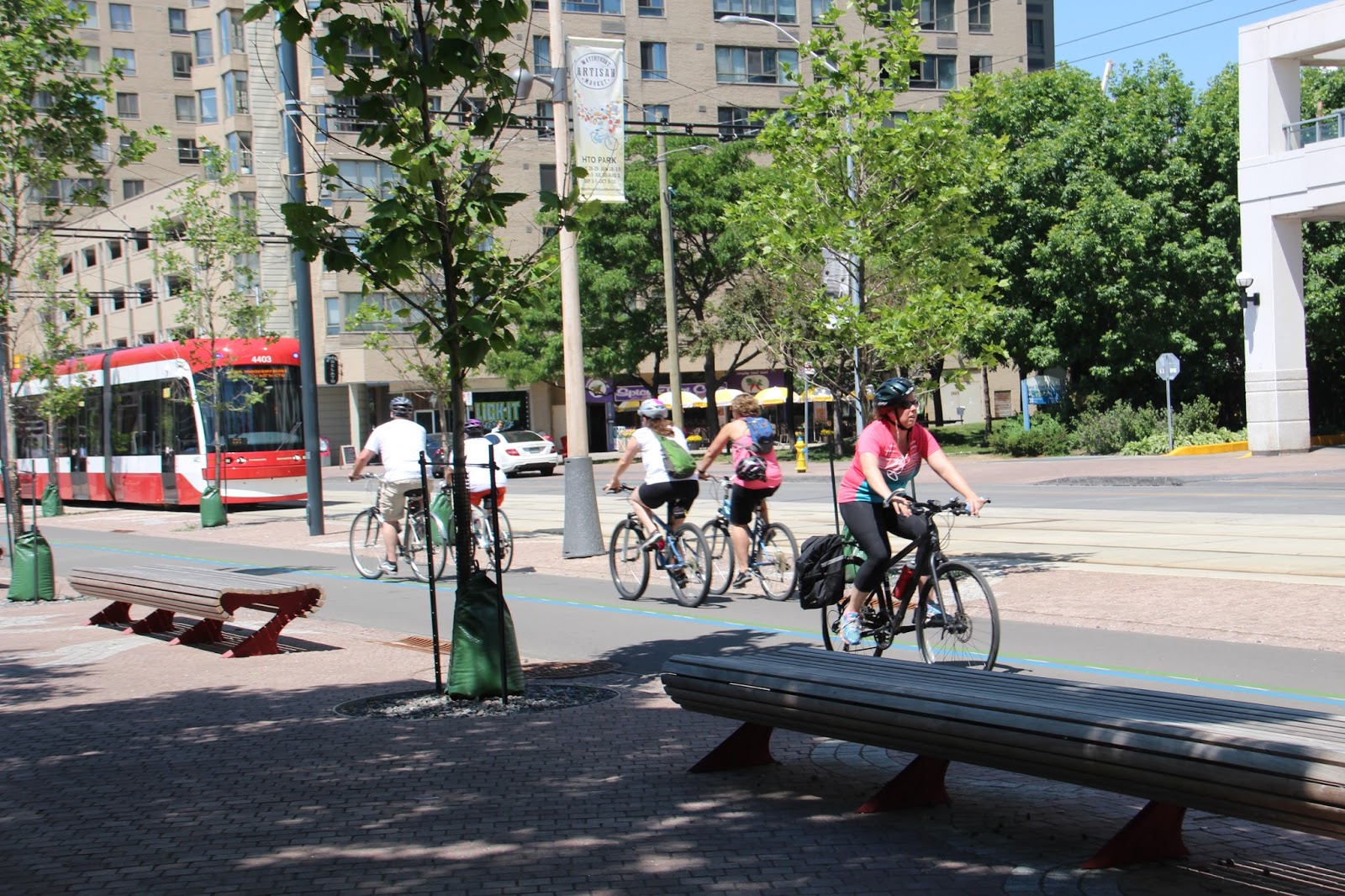
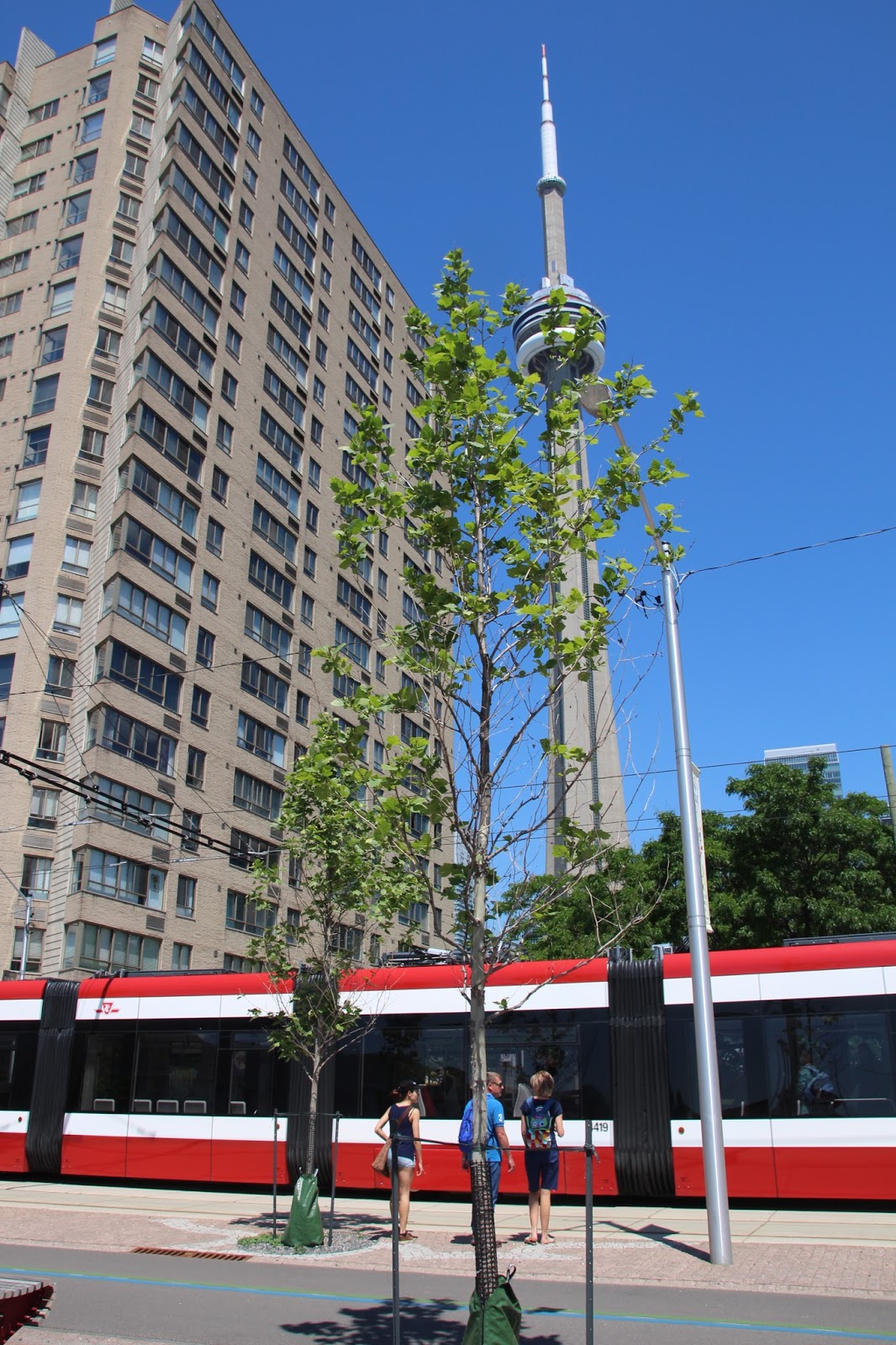
One year ago Toronto completed the $128.9-million, three-year construction project intended to transform the 1.7-kilometre stretch of the lakeshore into a “showpiece waterfront boulevard,” and when it was unveiled the public was confronted with an entirely new kind of street designed to give equal consideration to motorists, cyclists, pedestrians, and public transit.

There is all kinds of water traffic.


The Power Plant was initially established in 1976 as the Art Gallery at Harbourfront. The original Power Plant with its companion building The Ice House (today the Enwave Theatre), was constructed in 1926 to house the heating and refrigeration equipment for the massive Toronto Terminal Warehouse (now Queen's Quay Terminal).
In 1980, Harbourfront Corporation provided the Art Gallery at Harbourfront with the opportunity to renovate the 1920s powerhouse as its new home. The powerhouse was then converted to an art gallery and opened to the public on 1 May 1987. The Power Plant is recognizable by its smokestack and exterior façade which have been restored to maintain reference to its history.

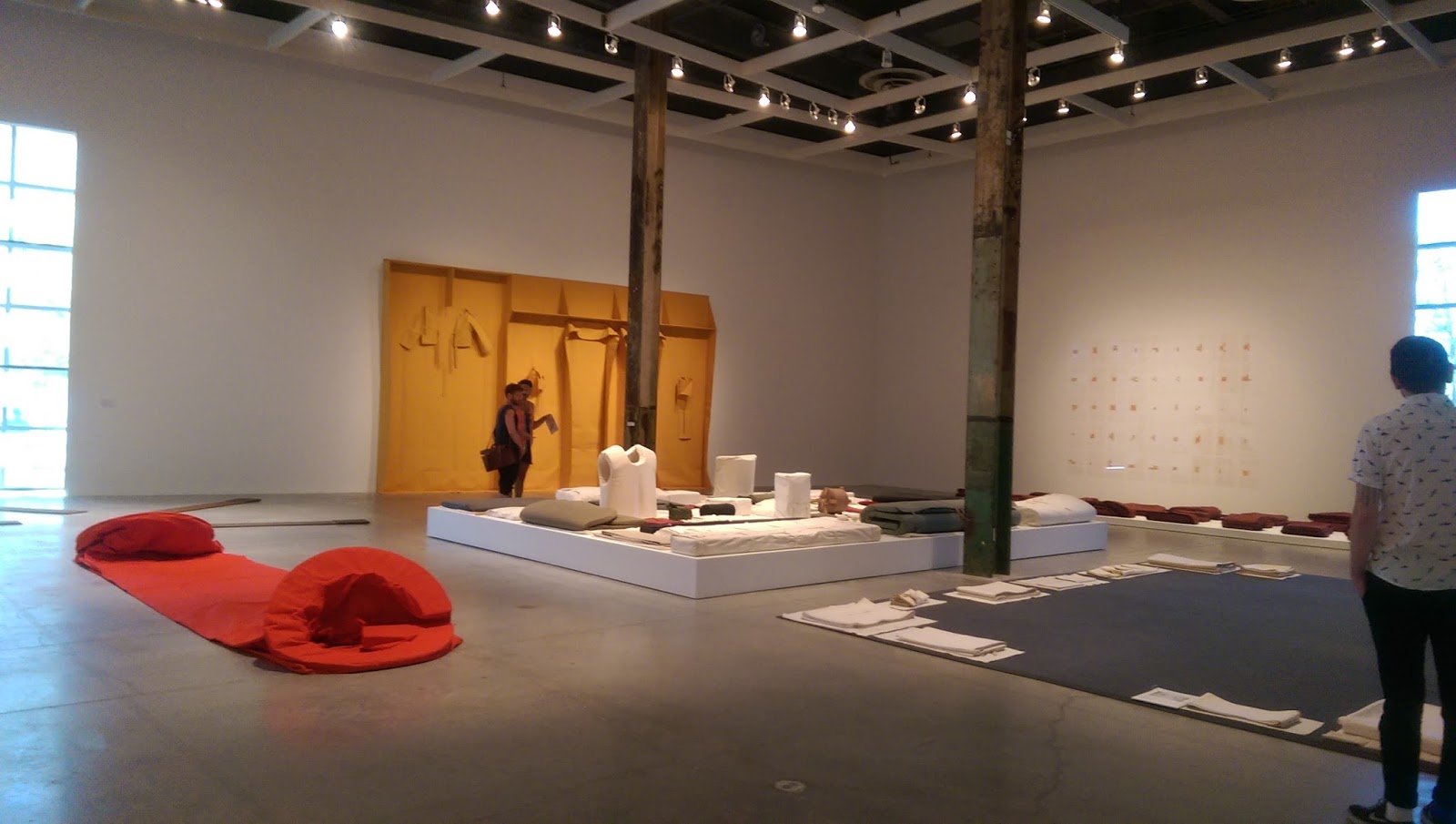
Even for me, this was a rather odd art exhibit.


Outside I loved this image of the Toronto Financial District, a living billboard as each building has corporate sponsorship.

Here is a photo of it from the Scotiabank 2016 Contact photography series.
Aude Moreau was invited to create a site-specific image as a large-format billboard on The Power Plant’s south facade. Captured from Toronto Fire Station 315 at College Street and Bellevue Avenue just after sunset, commercial logos glowing in the remaining light of dusk compete for visibility.


Time to stop for lunch at Amsterdam's....

... always good food and always crummy service but the location is perfect on a hot day. We sat on their shaded patio along the lake.
.


Time to walk off our lunch.


Plane going in for a landing at Billy Bishop Island Airport.


They are "valiant hearts" that made a "supreme sacrifice" while protecting lives, property and the environment in Toronto.


unaccompanied cello, BWV 1007 — was designed by internationally renowned cellist Yo Yo Ma and landscape designer Julie Moir Messervy, in collaboration with landscape architects from the City of Toronto's Parks and Recreation department. The following information is from the City of Toronto's website.
Tom Tollefson, architectural blacksmith, fabricated the Music Pavilion.
Tom Tollefson, architectural blacksmith, fabricated the Music Pavilion.
| Menuett | A Formal Flower Parterre This French dance was contemporary to Bach's time. Its formality and grace are reflected in the symmetry and geometry of this movement's design. Hand-crafted with ornamental steel, a circular pavilion is designed to shelter small musical ensembles or dance groups. |


Since we were walking east to west we started at the end of the garden, but no matter.

| Gigue | Giant Grass Steps That Dance You Down To The Outside World The Gigue or "jog" is an English dance, whose jaunty, rollicking music is interpreted here as a series of giant grass steps that offer views onto the harbor. The steps form a curved amphitheatre that focus on a stone stage set under a weeping willow tree; a place for informal performances. Shrubs and perennials act as large, enclosing arms, framing views out onto the harbour. |

| Courante | A Swirling Path Through A Wildflower Meadow Originally an Italian and French dance form, the ( Courante ) is an exuberant movement that is interpreted here as a huge, upward-spiraling swirl through a lush field of grasses and brightly-coloured perennials that attract birds and butterflies. At the top, a Maypole spins in the wind. |


| Prelude | An Undulating River Scape with Curves and Bends The first moment of the suite imparts the feeling of a flowing river through which the visitor can stroll. Granite boulders from the southern edge of the Canadian Shield are placed to represent a stream bed with low-growing plants softening its banks. The whole is overtopped by an alley of the native Hackberry trees, whose straight trunks and regular spacing suggest measures of music. |

Little Norway Park is a 2.36 hector or 5.38 Acre park serving local residents.
It's name commemorates a World War II training base. The base was used by the Norwegian Air Force and once existed on the site of the park. Facilities include: A soccer pitch, baseball diamond, playground & wading pool as well as landscaped gardens and numerous art installations.
It's name commemorates a World War II training base. The base was used by the Norwegian Air Force and once existed on the site of the park. Facilities include: A soccer pitch, baseball diamond, playground & wading pool as well as landscaped gardens and numerous art installations.

Next to Little Norway Park is the Waterfront Public School & Harbourfront Community Centre which opened in 1998 and provide strong community focus for Harbourfront residents.

But to our main destination! Ireland Park.

The park, is in the memory of the arrival of immigrants fleeing the Irish Famine. Nearby, immigrant sheds were established to receive the 38,560 Irish that arrived in Toronto in 1847. Five bronze statues stand (and in one case, lie) on a lawn nearby, signifying the mixed emotions and experience of the new immigrants, in a collective called “The Arrival”. In a similar park in Dublin, there are seven statues collectively called “Departure” — illustrating the loss of many ailing émigrés on the long voyage to Canada.
I was lucky enough to see Departure in Dublin even though it was just from the car.
Departure Dublin 2015 across from the Custom House.


Standing beside and to the rear of this figure is a pregnant woman, whose condition speaks to the prospect of new life and new hope in a new land.


Further behind these figures stands a young boy, whose clumsily gathered hands suggest his apprehension about his future and whether to go back or to go foreword.

Completing the group, closest to the grain silos, stands a male figure ‘Pius Mulvey’, inspired by Joseph O’Connor’s book ‘Star of the Sea’. I can attest that this is a great book!

Behind the figures looking at the skyline is a large block of black limestone from Ireland. The shape resembles a ship, but the limestone has been sliced into several pieces. In the small gaps, names of those who died making the voyage are engraved into the stone made of imported Kilkenny limestone.


Time to head back to Union Station for our separate journeys home.

Some sights on our way before my cell phone battery dies. Not sure what the significance of this sign is.

Some sights on our way before my cell phone battery dies. Not sure what the significance of this sign is.

I asked the owner if I could take a photo and she kindly moved out of the way.

K snapped this for me. This was outside a BOATEL a floating B and B to experience Toronto in a different way.