Showing posts with label scotland. Show all posts

14 November 2026

Day 10 - Edinburgh St. Giles Cathedral

What is the difference between a cathedral and a church? Upon googling I found:
The fundamental difference between a church and a cathedral is that the latter contains the seat for bishop. The distinction has nothing to do with the size of the building or its location; it's all about the bishop.


The following history is taken from their website.


There is record of a parish church in Edinburgh by the year 854, served by a vicar from a monastic house, probably in England. It is possible that the first church, a modest affair, was in use for several centuries before it was formally dedicated by the bishop of St Andrews on 6 October 1243. The parish church of Edinburgh was subsequently reconsecrated and named in honour of the patron saint of the town, St Giles, whose feast day is celebrated on 1 September.
That St Giles, a 7th century hermit (and, later, abbot) who lived in France, became the patron of both town and church was probably due to the ancient ties between Scotland and France.
According to legend, Giles was accidentally wounded by a huntsman in pursuit of a hind and, after his death in the early 8th century, there were dedicated to him hospitals and safe houses for cripples, beggars and lepers were established throughout England and Scotland within easy reach of the impoverished and the infirm. St Giles is usually depicted protecting a hind from an arrow, which had pierced his own body, a fine relief of which rests in the tympanum over the west (main) doors of the Cathedral.


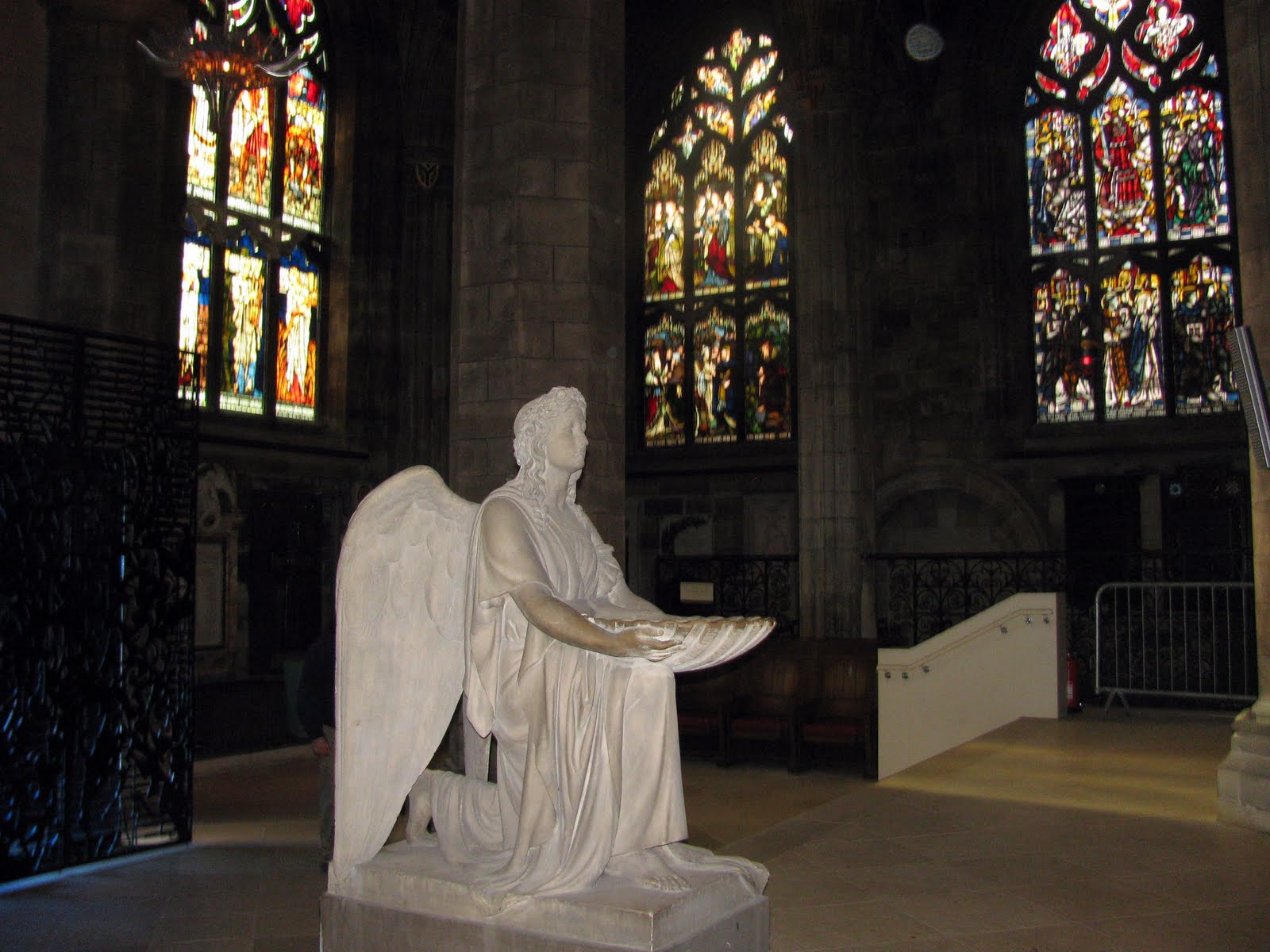
 The original or replica casts of Thorvaldsen's (1825) baptismal angel can be found in various cathedrals and museums worldwide, including St Giles' Cathedral in Edinburgh, St Andrew's Cathedral in Inverness, and the Nationalmuseum in Stockhololm.

Archibald Campbell, 8th Earl and 1st Marquess of Argyll (1607–1661), a prominent Scottish nobleman and leader of the Covenanters during the Wars of the Three Kingdoms.
He was beheaded near the cathedral in 1661 following the Restoration of King Charles II. 
Erected in the Jacobean style around 1895, featuring a recumbent effigy of Campbell with a sword and an inscription detailing his devotion to the reformed religion.

The stained glass window directly above the Marquess of Argyll monument—known as the Argyll Window—was created in 1896 by renowned Glasgow stained-glass artist Oscar Paterson. It features the heraldic coats of arms of the chief leaders of the Scottish Covenanters.


Almost none of St. Giles' original medieval stained glass exists today. During the Scottish Reformation in the 1560s, reformers viewed stained glass as idolatrous, smashed the windows, and replaced them with plain clear glass by 1575.
Stained glass did not return to the cathedral until the 1870s. Because of this gap, St. Giles showcases a fascinating timeline of Scottish glassmaking rather than medieval relics—ranging from Victorian heraldry to a vibrant, abstract Robert Burns Memorial Window installed in 1985 by Icelandic artist Leifur Breidfjörd.


Robert Burns


Bronze marker indicating the approximate burial site of the Scottish religious reformer John Knox (marked "I·K 1572"), which is located in Parliament Square (near space 23) outside St. Giles' Cathedral.


13 June 2025

Weekend Roundup

  Welcome to The Weekend Roundup...hosted by Tom The Back Roads Traveler
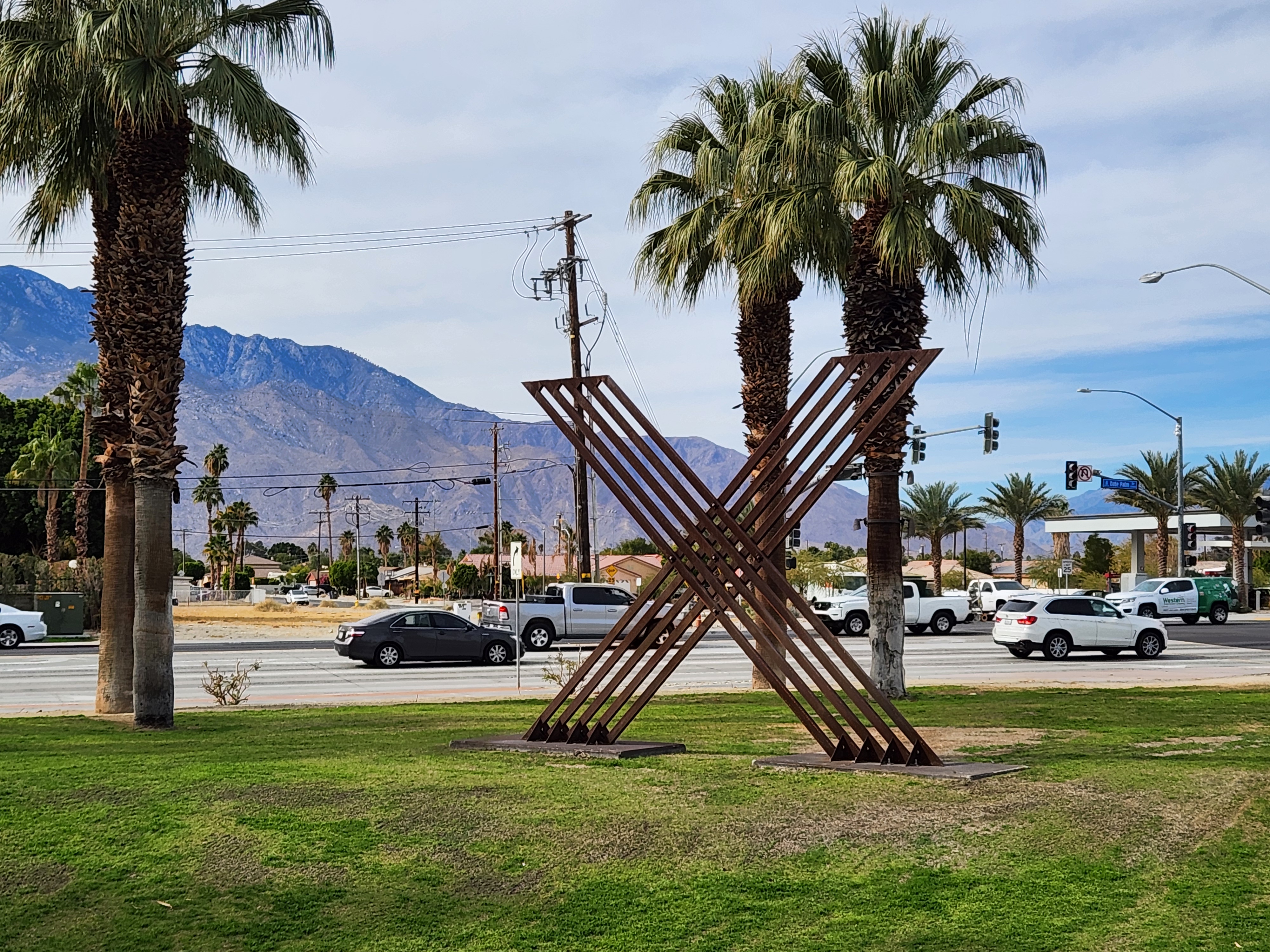
1.Has an "X"
2. A Favorite has an X
3. Looks like an X - chosen by Tom


Has an  X (BIGGEST/SMALLEST/LONGEST/SHORTEST/OLDEST/FIRST)
Artist:  Simi Dabah
Title:  “X” Marks the Spot
Cathedral City CA


FAVOURITE HAS AN X

BOXER  Las Vegas NV  “The Champ” Muhammad Ali is in the MGM in Las Vegas


LOOKS LIKE AN X

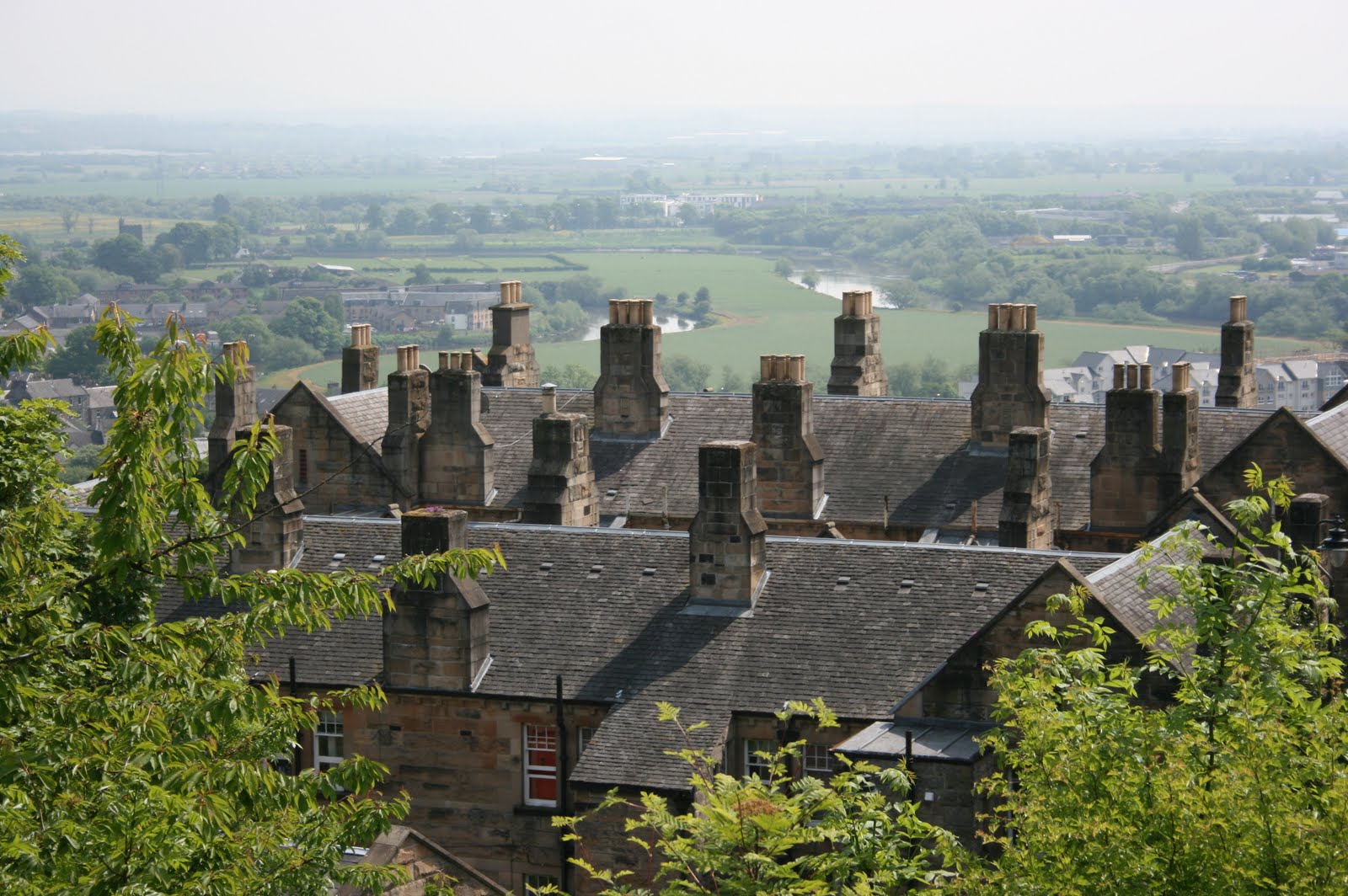
Taken from Edinburgh Castle


02 January 2025

Stirling Castle and Dunfermline Abbey Scotland


THROWBACK THURSDAY #TBT


First posted June 2010
Repost December 2024

We had been to Stirling Castle in 2001, however we went back in 2010.


The one thing that had stuck out in my memory was the King's Knot.


View from the castle.


The palace was built for King James V and his second queen, Marie of Guise, around 1540. It is one of the most remarkable Renaissance buildings not just in Scotland but the whole of Britain. Indeed, it is now the country’s most complete example of a palace of its era.

That is the Wallace monument in the distance.


The gardens were perfect.


It is a beautiful castle to visit and they had some interesting exhibits on display. I particularly liked The Great Kitchens which had a short video explaining where all the food would come from and how it would be cooked and stored.


Some entertainment in the Grand Hall.


Dunfermline is a large town in the west of Fife. It was once the capital of Scotland and it's a great place to visit if you're interested in history. Dunfermline's heritage quarter includes the 12th century abbey which is the final resting place of Robert the Bruce and the burial site of 11 other Scottish kings and queens. You can also step back in time in The Royal Palace, Abbot House and St Margaret's Cave. The famous philanthophist Andrew Carnegie was born in Dunfermline.


Dunfermline Abbey is a Church of Scotland Parish Church. The church occupies the site of the ancient chancel and transepts of a large medieval Benedictine abbey, which was sacked in 1560 during the Scottish Reformation and permitted to fall into disrepair. Part of the old abbey church continued in use at that time and some parts of the abbey infrastructure still remain. Dunfermline Abbey is one of Scotland's most important cultural sites.


The Benedictine Abbey of the Holy Trinity and St Margaret, was founded in 1128 by King David I of Scotland, but the monastic establishment was based on an earlier foundation dating back to the reign of his father King Máel Coluim mac Donnchada, i. e. "Malcolm III" or "Malcolm Canmore" (regnat 1058-93), and his queen, St Margaret of Scotland. At its head was the Abbot of Dunfermline, the first of which was Geoffrey of Canterbury, former Prior of Christ Church, Canterbury, the Kent monastery that probably supplied Dunfermline's first monks. At the peak of its power it controlled four burghs, three courts of regality, and a large portfolio of lands from Moray in the north south to Berwickshire.


I was happy, John less so, that there were a couple of weddings.


We drove over to the Wallace Monument but decided at the last minute not to visit it as we had been there before.

Photos from 2001! Sadly, pre-digital.


On our previous visit we saw the statue of Braveheart as Mel Gibson and it made us laugh. I’ve since learned the following:

In 1997, a statue of Gibson as "William Wallace" was placed outside the Wallace Monument near Stirling, Scotland. The statue, which includes the word "Braveheart" on Wallace's shield, the work of sculptor Tom Church, was the cause of much controversy and one local resident stated that it was wrong to "desecrate the main memorial to Wallace with a lump of crap". In 1998 the statue was vandalised by someone who smashed the face in with a hammer. After repairs were made, the statue was encased in a cage at night to prevent further vandalism. This only incited more calls for the statue to be removed as it then appeared that the Gibson/Wallace figure is imprisoned. The statue was removed from the site in 2008 to make way for a new restaurant and reception to the visitors' centre.


Day 16 Edinburgh to Melrose/Carlisle.
Melrose and a Pig with Bagpipes

Signs

   Joining Tom at Signs2. Around town 2026