Showing posts with label borax. Show all posts

18 January 2024

Throwback Thursday - Dirty Laundry

 March 2017 - Los Angeles to Las Vegas

Weekly Recap
Day 1 Los Angeles
Day 2 LA to Monterey
Day 3 Monterey and area
Mission at Carmel
Day 4 Monterey to Solvang including Hearst Castle
Day 5 Solvang
Santa Ynez Mission
Day 6 Solvang to Bakersfield includes San Luis Obispo
SLO Mission
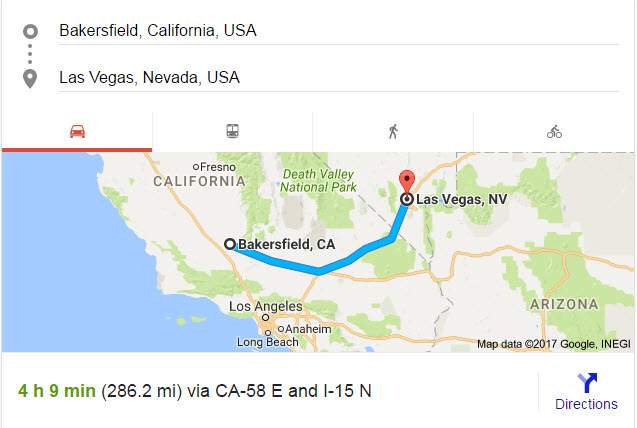
Day 7 Bakersfield to Las Vegas
Boron CA


March 2017 - Boron CA


We see this road sign and are intrigued. We'd come across the mule team in Death Valley in 2003, which seems to need a post!


Wikipedia

Boron is named after the element boron and is the site of the world's largest source of the boron compound boric acid.

Boron is a hinterland community on the western edge of the Mojave Desert. Within a half day's drive, one can view the highest and lowest points in the contiguous 48 states of the United States (Mount Whitney and Death Valley), the world's oldest tree, the bristlecone pine, and the cities of both Los Angeles and Las Vegas.


We are intrigued and decide to check out the Visitors' Centre, if, for nothing else to use the bathrooms.

As we enter, we start wondering if it would be open on a Saturday, yup, the sign says seven days a week.

Definitely the working operations.
Boron is home to the U.S. Borax Boron Mine, California's largest open-pit mine, which is also the largest borax mine in the world.


Quite specific!


HMMM looks like the Visitors' Centre is up there.


Bathrooms straight ahead! Not a very busy place.


Borax traces its roots to California’s Death Valley, where borate deposits were discovered in 1872. The twenty mule teams Borax used to haul ore out of the remote desert live on as a symbol of the company’s commitment to innovation. 


We go into the Visitors' Centre and are greeted by senior volunteers who clearly had worked at the mine.


The current open pit in the Mojave Desert began as an underground mine in 1927, and Boron Operations was converted to a surface mine in the late 1950s. At this time extensive facilities for refining ore were built. In 1980, Borax built its boric acid plant, securing the company’s position as the world’s leading boric acid supplier.


So what the heck is borax? I knew we used it in laundry detergent, I have a vague memory of my mother buying it.

We had no idea what it was used for other than that!

I decided to check out how safe borax is in the products we use. I found the following from David Suzuki:

Before 2000, borax was a common household item. It was a popular, effective cleaning product. It disinfects, whitens and fights mold and mildew. It also kills ants (used as a low-risk pesticide).
Many DIY cleaning recipes featured borax as an eco-friendlier option to petroleum-based ingredients in conventional cleaning products.
In 2008, the European Union (PDF) classified boric acid and borax as reproductive toxins. But it said consumer exposure to low doses of borates in cleaning products—soaps and detergents—is 'negligible.'


In 2016, Health Canada did a screening assessment of boric acid: "The Government of Canada is proposing that boric acid, its salts, and its precursors may be considered harmful to human health at current levels of exposure."
What's "exposure"?

  • Through food (such as fruits and vegetables) and drinking water. But "Natural sources of boric acid in food (for example, fruits and vegetables) are not considered to be a health risk."
  • Through common consumer products such as pesticides, cleaning products, cosmetics, drugs, natural health products, and swimming pool and spa products.
  • From DIY arts and crafts and toys made with boric acid.


WOW!


Am I the only one who doesn't remember this TV show?

Death Valley Days was an American radio and television anthology series featuring true stories of the old American West, particularly the Death Valley area. Created in 1930 by Ruth Woodman, the program was broadcast on radio until 1945 and continued from 1952 to 1970 as a syndicated television series, with reruns (updated with new narrations) continuing through August 1, 1975. The radio and TV versions combined to make the show "one of the longest-running western programs in broadcast history.
The series was sponsored by the Pacific Coast Borax Company (20 Mule Team Borax, Boraxo) and hosted by Stanley Andrews, alias "the Old Ranger" (1952–1963), Ronald Reagan (1964–1965), Rosemary DeCamp (1965), Robert Taylor (1966–1969), and Dale Robertson (1969–1970). With the passing of Dale Robertson in 2013, all the former Death Valley Days hosts are now deceased. Hosting the series was Reagan's final work as an actor; he was cast in eight episodes of the series.


Click here to see the multitudes of stars who played parts over the years.

Clint Eastwood starred in the episode The Last Letter.

Leonard Nimoy, DeForrest Kelley and George Takai also played parts.


Here's an episode hosted by Ronald Reagan.


We then attended a short documentary and after that, the volunteer opened the curtains so we had an incredible view of the pit.

Some of our questions were answered by the volunteer as she explained what was going on.

There is no housing on the site, most work 3 or 4 day weeks, commuting from Bakersfield, Palmdale.


An hour later and we are back on the road. No wonder it takes us so long to get anywhere!


09 April 2017

Day 7 So Cal Bakersfield CA to Las Vegas NV

March 2017 - Bakersfield CA to Las Vegas NV

Weekly Recap
Day 1 Los Angeles
Day 2 LA to Monterey
Day 3 Monterey and area
Mission at Carmel
Day 4 Monterey to Solvang including Hearst Castle
Day 5 Solvang
Day 6 Solvang to Bakersfield includes San Luis Obispo
SLO Mission

Our last day in California and we take a quick tour of downtown Bakersfield as I had read that they had some murals.

It is Sunday and it is dead quiet downtown, again another downtown that has a lot of homeless and closed up small businesses. There's a lot of history here.

Bakersfield's Fox Theater opened on Christmas Day, 1930, with the feature film Just Imagine, a sci-fi film set 50 years in the future. The 1930s were a strong period for the Fox Theater. The silver screen featured the latest "talkie" pictures, and the stage was graced by numerous acts including Bakersfield native Metropolitan Opera baritone Lawrence Tibbett (1933); world-renowned soprano Kirsten Flagstad (1939); the Los Angeles Philharmonic Orchestra (1939); and the classic pianist Arthur Rubinstein (1940).


I heard an ad for this performance and thought it would have been great to hear.


I couldn't find this performance but did find their Star Wars.


I found the following fascinating history at Backpacker Verse site.

The Padre Hotel is a luxury Western-themed hotel. Built in the late 1920s, it became a hub for the famous nightlife on Union Avenue. It’s even known as the professional birthplace of Johnny Carson.

However, from the 1960s onwards, its history began growing dark.

There were rumors that the owner had connections to organized crime in Chicago, but nobody has been able to prove them to be true.

It gained a reputation as a ‘lover’s leap’ or suicide point.
And now, it’s the forever home of many entities that took their last breath there.


Many children died at this famous Bakersfield hotel in the 1950s, especially during the fire on the 7thfloor and the earthquake that trapped them in the basement.

Though it’s been decades since these tragedies, the ghosts don’t seem to be going anywhere anytime soon.
Throughout the halls and in your room, you’re bound to hear the giggles of children or come across the ghosts themselves.
The staff reported seeing a little girl wearing 1920s clothing with a hat and gloves, staring down at them from the banister.

But these sprites are more mischievous than malevolent.


The Nile opened in 1906 as the Bakersfield Opera House. In 1924 it was renamed the Nile and then remodeled in 1927.
In 1937 it received a new marquee and an Art Moderne renovation designed by S. Charles Lee.
By the time the building was vacated in 1994, it had been divided into a twin. In July of 2006, the former Nile Theatre was reopened as the Nile Bar & Grill.


It now appears to be the Hingepoint Church!


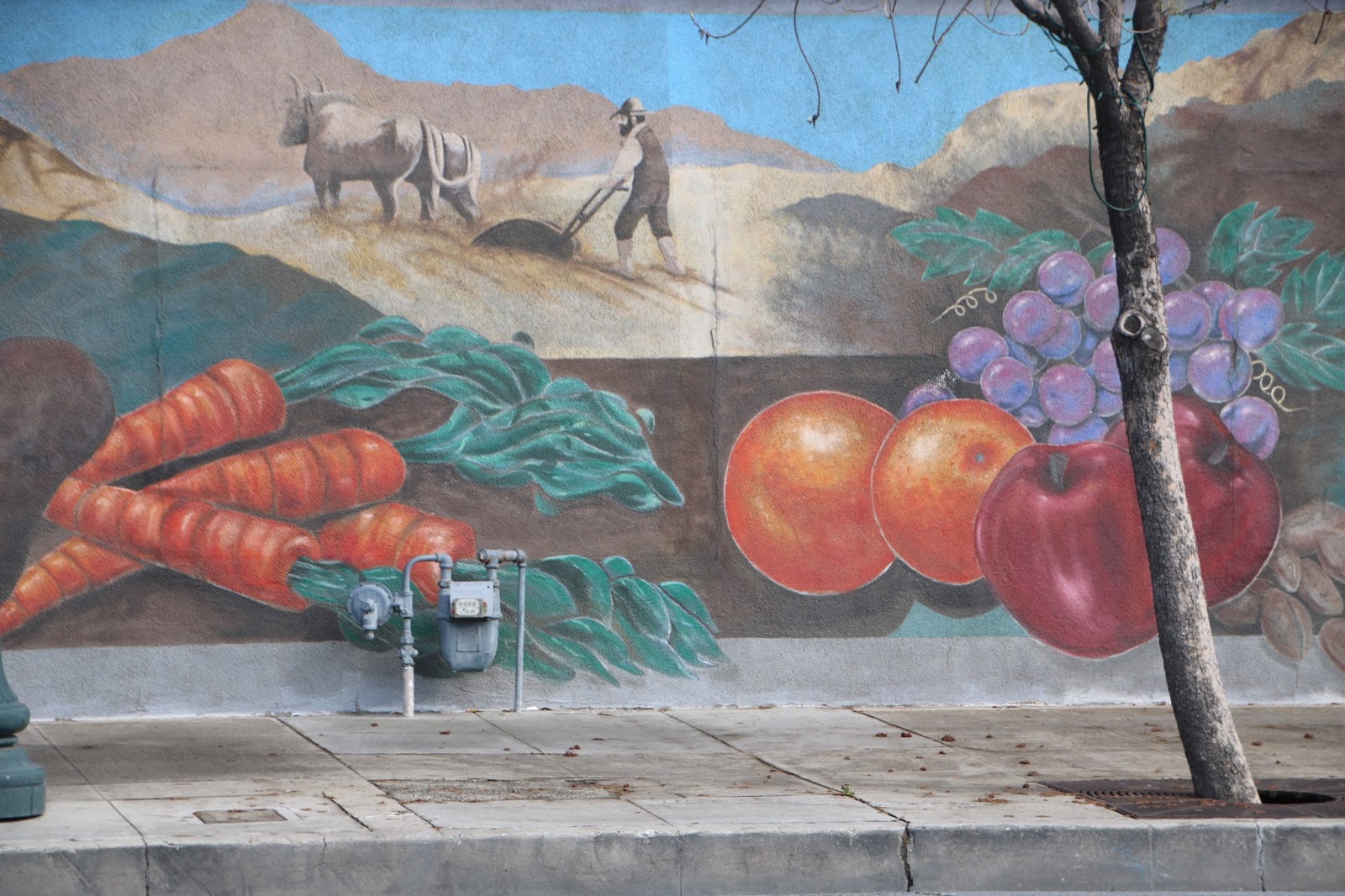
Cool street art scattered around.


I'm having a little trouble associating the title with the above.


Some of the murals, I am saving some of my favourites!


Definitely my favourite utility box.


Yesterday we had cows today it's cars!


It's time to get in the car and head towards our next destination - Las Vegas for a week.

We'll continue on 58 which is nice as it is a new way for us to Vegas until we join 15 which we've done numerous times.

Am I the only one who sees King Kong?


The Kawaiisu people (also Nuwu ("people" in Kawaiisu), or Nuooah) are the Native American tribe whose homeland was the Tehachapi Valley, and seasonally the southern Sierra Nevada and Mojave Desert, for thousands of years.

One possibility for the origin of the name Tehachapi comes from the Kawaiisu language. It may be derived from the word for "hard climb" or tihachipia, according to the Tomi-Kahni Resource Center.

Considering it is only 4,000 feet above sea level, the temperature dropped considerably as we drove through.


When we met up with Carol and Bill in Las Vegas I asked her about these planes.


An aircraft boneyard is a storage area for aircraft that are retired from service. Most aircraft at boneyards are either kept for storage or have their parts removed for reuse or resale and are then scrapped. Deserts, such as those in the Southwestern United States, are good locations for boneyards since the dry conditions reduce corrosion and the hard ground does not need to be paved.

The Mohave Air and Space Port is home to a thousand commercial vehicles.


We see this sign and immediately think of Death Valley where we first heard about the Borax Twenty Mule Team and decide it's worth a visit, which is free by the way.

You'll have to wait for more as this post is getting very longwinded!


Billboards for Las Vegas.


Oddness in the desert.


My favourite signfor a road.


Salt flats – large reservoirs that are filled with salt water then left to undergo the natural process of evaporation. After the solar process what remains is a layer of salt. They add more salt water and let it evaporate again. Eventually, there is a thick crust of salt left and that is harvested, processed and sold.


Must be in Nevada!


Checked into Wyndham Grand Desert with a very different view from January.


Europe 2026 Itinerary REVISED REVISED REVISED

 October 2026 This trip started out as a river cruise Budapest to Bucharest with Scenic Cruises Oct 18 - 25. So we booked our own flights an...