It's a nod to downtown history. The building was given life some 110 years ago by local architect/merchant Charles Mills, and in the early 1900s, the address was home to a thriving business called — you guessed it – Mills Hardware. You’ll find the historic signage suspended above the venue’s bar.
By the middle of the century, that hardware store closed, and the building began its transition to live entertainment. In the '50s and '60s, that meant headliners like Ronnie Hawkins & The Hawks, The Ink Spots, The Platters, and Tiny Tim (booked by legendary impresario Harold Kudlets, whose agency was across the street in the Royal Connaught). By the '80s and early '90s, 95 King East was hosting acts such as OMD, NoMeansNo, Tragically Hip, Joan Jett, and the Ramones. That eclectic tradition continues today with programming that embraces a variety of music genres, along with theatre, comedy, spoken word, visual art, film and much more.
On September 19 we had tickets for 11 AM at the Halton County Radial Railway Museum. It was on my to do list and as I checked their website I saw that they were only open on weekends to the middle of October. Due to COVID you had to buy timed tickets ahead of time.
The Halton County Radial Railway (HCRR) is a full-size operating electric railway and museum, featuring historic electric railcars operating on two kilometers of scenic track.
The HCRR and OERHA formed in 1954 by a group of men who wanted to save Toronto Transit Commission (TTC) streetcar 1326 from being sent to the scrap yard. After the donation of this streetcar, the dream grew. Land that used to be a part of the Toronto Suburban Railway in Nassagaweya Township was acquired, and subsequently, a number of other street and radial cars were eventually rescued. The museum’s grand opening to the public took place in 1972.
The tracks conform to the TTC's track gauge of 4 ft 10+7⁄8 in (1,495 mm), which is 60 mm (2+3⁄8 in) wider than 1,435 mm (4 ft 8+1⁄2 in) standard gauge. Vehicles from other systems must be altered to accommodate the tracks, and cars intended for third-rail power must be reconfigured for use with overhead wire.
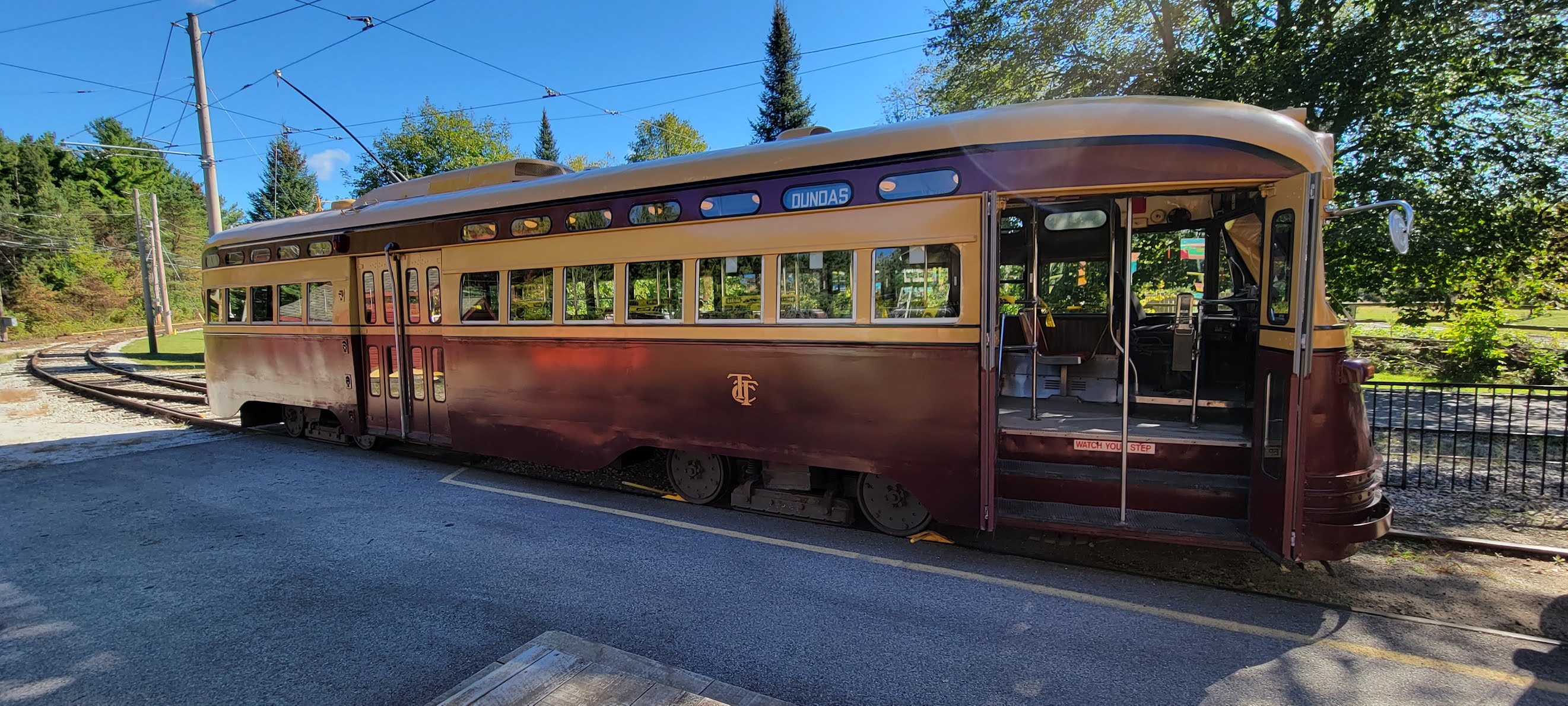
The three cars that are outside are available to ride all day long.
Toronto Transit Commission 2894 Fleet Number: 2894 Built: 1923 System: Toronto Transit Commission Retired: 1963 Builder: Ottawa Car Company Acquired: 1986 Type: SE-DT Streetcar Status: Restored & operational Used as a tour tram from 1973 until 1986. Last car to operate on Dupont route in 1963.
Toronto Transit Commission 4600
Fleet Number: 4600
Built: 1951
System: Toronto Transit Commission
Retired: 1995
Builder: Canadian Car & Foundry Acquired: 1996
Type: SE-DT
Operational Prototype class A-15 Rebuild car. Rebuilt in 1986 from Class A-8 car 4505.
This first thing we did was get a front row seat for a ride on #327.
Gotta love social distancing! Due to COVID every other row was blocked off and no strangers sit next to you.
The original streetcar #327 was built by the Toronto Railway Company in 1893 and retired in 1915, and left to decay in dead storage until it was scrapped by the TTC in 1921. A replica of #327 was built by the TTC using the streetcar’s original truck and some components in 1934 for Toronto’s Centennial.
Odd numbers were used for open cars (summer) and even numbers for closed (winter).
This bell was for the driver and conductor to communicate, not for a stop. The driver said they didn't really stop only slowed down for people to hop on and off.
Considering this is what I would have been wearing I doubt I would be hopping on or off!
Photo taken - Toronto Mechanics Institute, Church St., northeast corner of Adelaide St. East. ; Interior, Reference Library
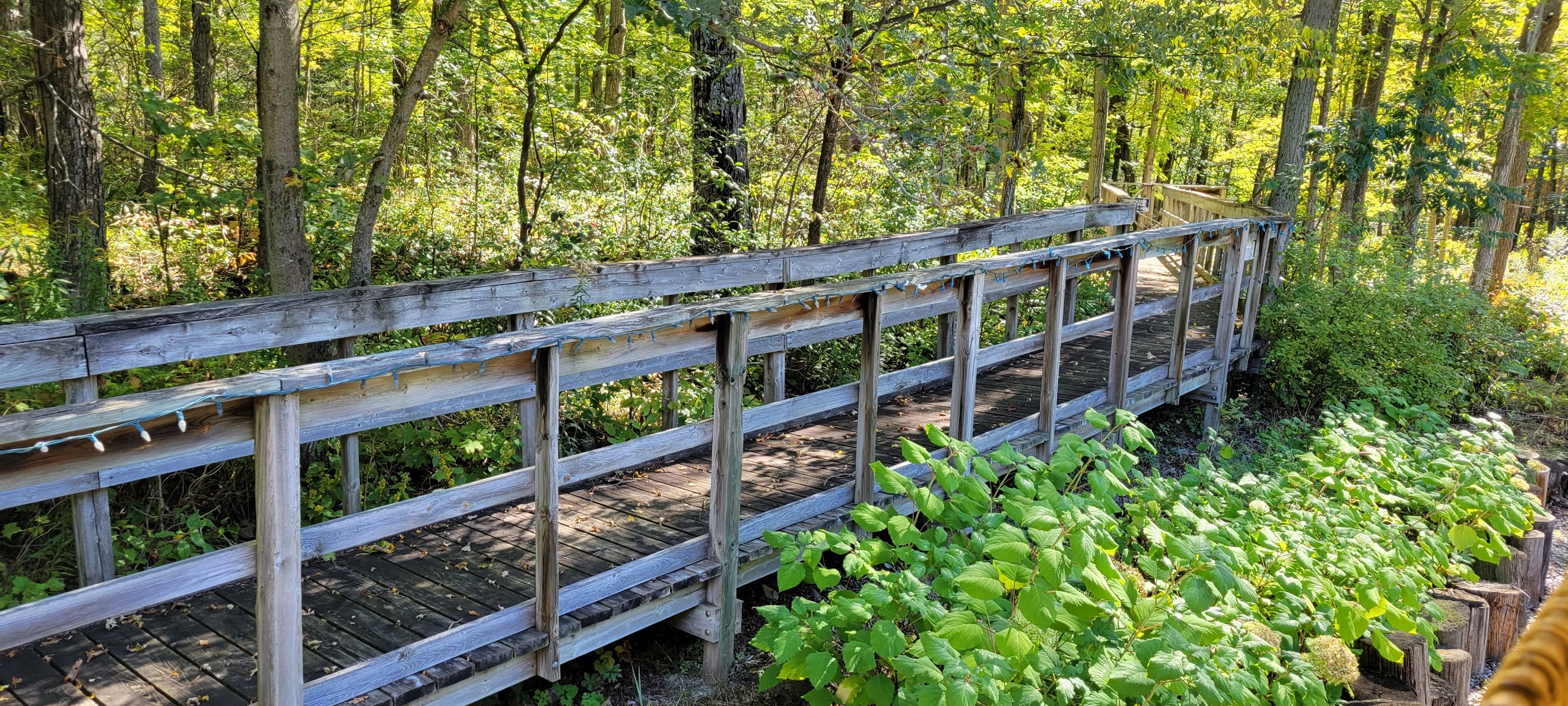
Replica of the Meadowvale station. The original is in the museum.
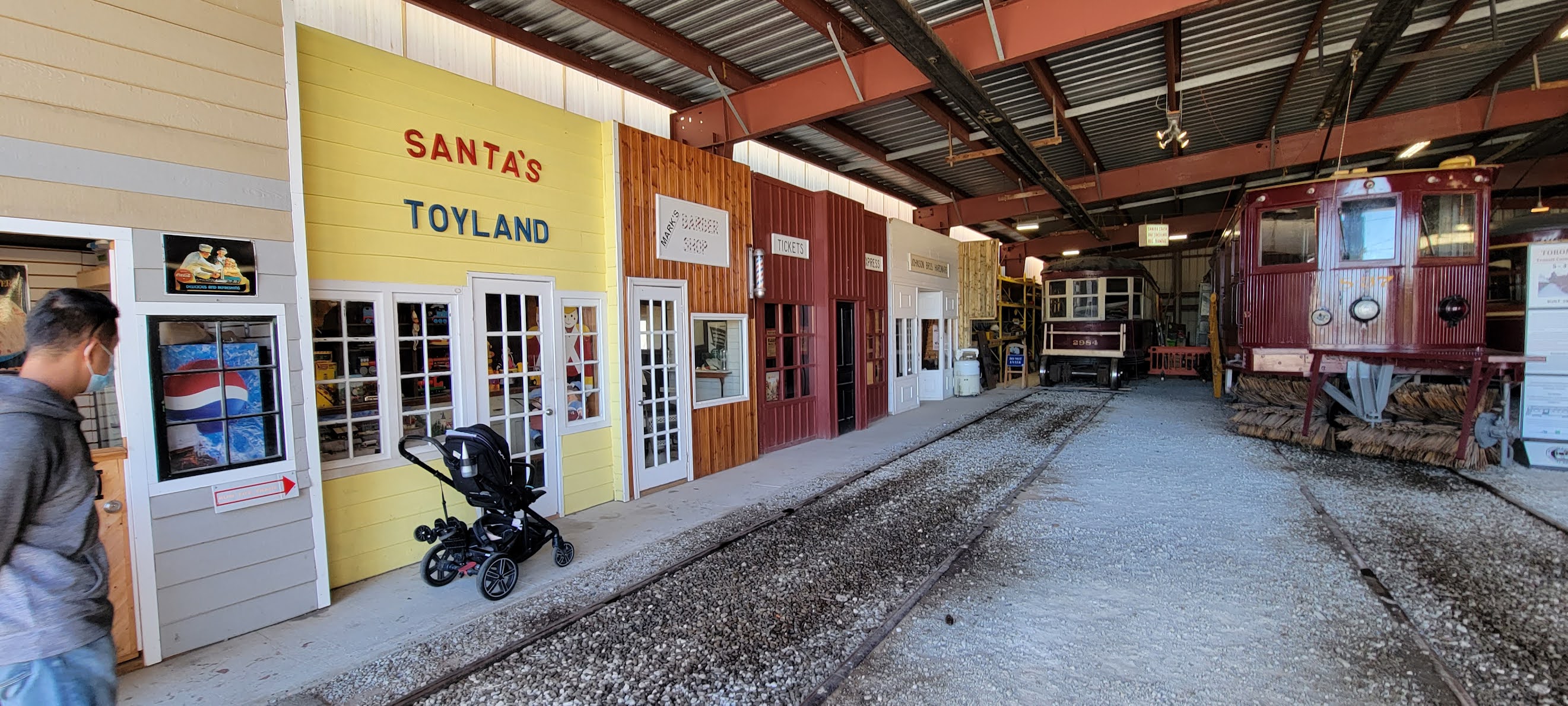
Back at the station and we headed to the indoor museum.
Pit jacks are used for lifting up tramway cars by the bogies for accessibility of the axles for maintenance and adjustment of the car body.
Fleet Number: 300
Built: System: London & Port Stanley Railway
Retired: Builder: Acquired: 2019 Type: DT boxcar Status: Unrestored Was first used by New York Central and purchased by L&PS after WW2
Fleet Number: 2424
Built: 1921 System: Toronto Transit Commission
Retired: 1962 Builder: Canadian Car & Foundry
Acquired: 1962 Type: SE-DT Streetcar Status: Restored & operational From the TTC’s first order for new Large Peter Witt cars in 1921 (2300-2498).
Rebuilt for one man operation.
Fleet Number: TP-11
Built: 1945 System: Toronto Transit Commission
Retired: 1976 Builder: National Steel Car Acquired: 1978 Type: SE-DT Snow Plow
Status: Under Restoration Snow Plow. Equipped with high speed interurban trucks. Equipped by TTC. Largest street railway snowplow in Canada.
Fleet Number: 4204
Built: 1987 System: Toronto Transit Commission
Retired: 2019 Builder: Can-Car Rail
Acquired: 2019 Type: SE-TT Streetcar
Status: Operational This “bendy” streetcar was designed as an articulated version of the TTC’s Canadian Light Rail Vehicles. The ALRV has 3 trucks and seats 61.
Fleet Number: 55
Built: 1915 System: Toronto Civic Railway
Retired: 1954 Builder: Preston Car & Coach
Acquired: 1954 Type: DE-ST Streetcar
TCR #55 was the second car acquired in 1954, and was restored from TTC scraper car #2210 back to it’s original passenger service design.
Fleet Number: W-30, W-31
Built: 1946 System: Toronto Transit Commission
Retired: 1999 Builder: Pullman Standard
Acquired: 2002 Type: SE-DT Rail Grinder
Status: Unrestored – Operational Rail Grinding train. Converted from All Electric MU PCC cars 4631 and 4668, formerly Cleveland Transit system 4206 and 4243.
Fleet Number: W-28
Built: 1917 System: Toronto Transit Commission
Retired: 1976 Builder: Preston Car & Coach
Acquired: 1976 Type: SE-ST Rail Grinder
Status: Restored & operational Rail Grinder. Converted from snow scraper 2214, Formerly passenger car 2214, originally Toronto Civic Railway #57. .
Fleet Number: 2786
Built: 1923 System: Toronto Transit Commission
Retired: 1963 Builder: Canadian Car & Foundry
Acquired: 1973 Type: SE-DT Streetcar
Status: Unrestored – Operational Operated occasionally for special events. Small Peter Witt type.
Originally a box car used by Grand Truck Railway before CN rebuilt it into a caboose in 1948. It was retired around 1980, moved to a private property in Newtonville in 1984 and completely restored. It was then relocated to Richmond Hill in 1999, and eventually acquired by our museum.
Fleet Number: 107
Built: 1912 System: Montreal & Southern Counties Railway
Retired: 1955 Builder: Ottawa Car Company.
Acquired: 1956 Type: DE-DT Suburban
Status: Restored & operational Multiple unit Suburban Combine. First interurban car. Regauged by National Steel Car.
Fleet Number: 23
Built: 1901 System: London Street Railway
Retired: 1935 Builder: Montreal Park & Island Railway
Acquired: 1983 Type: SE-DT Streetcar
Status: Restored & operational
Acquired as a body from Wonderland Park in London. Restored to running condition. Uses Curtis D-2 Trucks from Toronto.
.
Fleet Number: 1326
Built: 1910 System: Toronto Railway Company
Retired: 1951 Builder: Toronto Railway Company
Acquired: 1954 Type: SE-DT Streetcar Status: Restored The last wood streetcar retired by the TTC and first artifact in our collection.
Fleet Number: W-4
Built: 1904 System: Toronto Railway Company
Retired: 1974 Builder: Toronto Railway Company
Acquired: 1974 Type: SE-DT Flatcar
Status: Unrestored – Operational
Flat Motor. Equipped with cab at one end. Used for carrying materials.