Showing posts with label santa fe. Show all posts

28 March 2024

Loretto Chapel, NM


April 2006 - Santa Fe New Mexico


The history of the Loretto Chapel began when Bishop Jean Baptisite Lamy was appointed by the Church to the New Mexico Territory in1850. Bishop Lamy, seeking to spread the faith and bring an educational system to this new territory, began a letter writing plea for priests, brothers and nuns to preach and teach. In one of his letters he is said to have written, “I have 6000 Catholics and 300 Americans.” The first acceptance of his general plea was from the Sisters of Loretto.

In 1852 the Sisters of Loretto responded to Lamy’s pleas by sending seven sisters who agreed to make this arduous journey to Santa Fe. Their trek was through St. Louis, then up the river to Independence, Mo. This small group was beset by a cholera epidemic, the Mother Superior died, and another nun was too ill to continue the journey and returned to Kentucky. An additional story continues that they traveled by wagon through bad weather, and Indian country.

The Sisters arrived in Santa Fe in 1852 and opened the Academy of Our Lady of Light (Loretto) in1853. The school was started and grew from very small beginnings to a school of around 300 students, despite the challenges of the territory (smallpox, tuberculosis, leaky mud roofs and even a brush with the rowdy Confederate Texans during the Civil War).


Two mysteries surround the spiral staircase in the Loretto Chapel: the identity of its builder and the physics of its construction.

When the Loretto Chapel was completed in 1878, there was no way to access the choir loft twenty-two feet above. Carpenters were called in to address the problem, but they all concluded access to the loft would have to be via ladder as a staircase would interfere with the interior space of the small Chapel.

Legend says that to find a solution to the seating problem, the Sisters of the Chapel made a novena to St. Joseph, the patron saint of carpenters. On the ninth and final day of prayer, a man appeared at the Chapel with a donkey and a toolbox looking for work. Months later, the elegant circular staircase was completed, and the carpenter disappeared without pay or thanks. After searching for the man (an ad even ran in the local newspaper) and finding no trace of him, some concluded that he was St. Joseph himself, having come in answer to the sisters' prayers.

The stairway's carpenter, whoever he was, built a magnificent structure. The design was innovative for the time and some of the design considerations still perplex experts today.

The staircase has two 360 degree turns and no visible means of support. Also, it is said that the staircase was built without nails—only wooden pegs. Questions also surround the number of stair risers relative to the height of the choir loft and about the types of wood and other materials used in the stairway's construction.


16 November 2023

TT - Palm Springs CA


October 2015 - Palm Springs CA

Click here for more photos from our visit to the garden.


This sculpture garden is tucked away behind the palm trees that line highway 111 beside the Art Museum.


Set in a lushly landscaped desert oasis of water features, native plants and winding walkways dotted with natural rock benches, the sculpture garden houses the art of modern masters, including works by Donald Judd, Betty Gold, Yehiel Shemi , Felipe Castaneda, Jesús Bautista Moroles, Dan Namingha, Gio Pomodoro, and Dave McGary.


The 250,000 square feet of sculpted, rolling landscape is covered with native plantings, winding pathways, and water features.


I thought I recognized this young lady!! I believe we had seen it in Sante Fe NM years ago.


The title is Walks Among The Stars by Dave Mc Gary. It is the second bronze in the Native American Women series. It depicts a late 18th century Lakota woman displaying her beautiful heirloom star quilt. As the Indian Wars ended and the North Plains tribes faced relocation to reservations, the Sioux women began making patchwork, quilts as replacements for traditional buffalo robes. Today, the star quilt is a symbol of prestige, sentiment, belonging and status within the contemporary Lakota culture.


Palm Springs


I knew it! I looked through my Santa Fe photos and there she is! I swear it's the same maiden in 2006.

And I had posted it back in 2013.

Santa Fe


24 April 2020

Weekend Roundup

Welcome to The Weekend Roundup...hosted by Tom The Back Roads Traveler


1. Starts with "Q"
2. A Favorite
3. QUANTITYchosen by Tom

Starts with "Q"
QUOTE Vancouver BC


Favourite
QUAYSIDE Tavira Portugal


QUANTITY

Some of my quantity of coffee mugs, didn't want to take them all out of the cupboard! Yes, I use them for plants too!


Déjà Brew
QUIRKY Santa Fe NM


24 July 2017

Tuesday Treasures


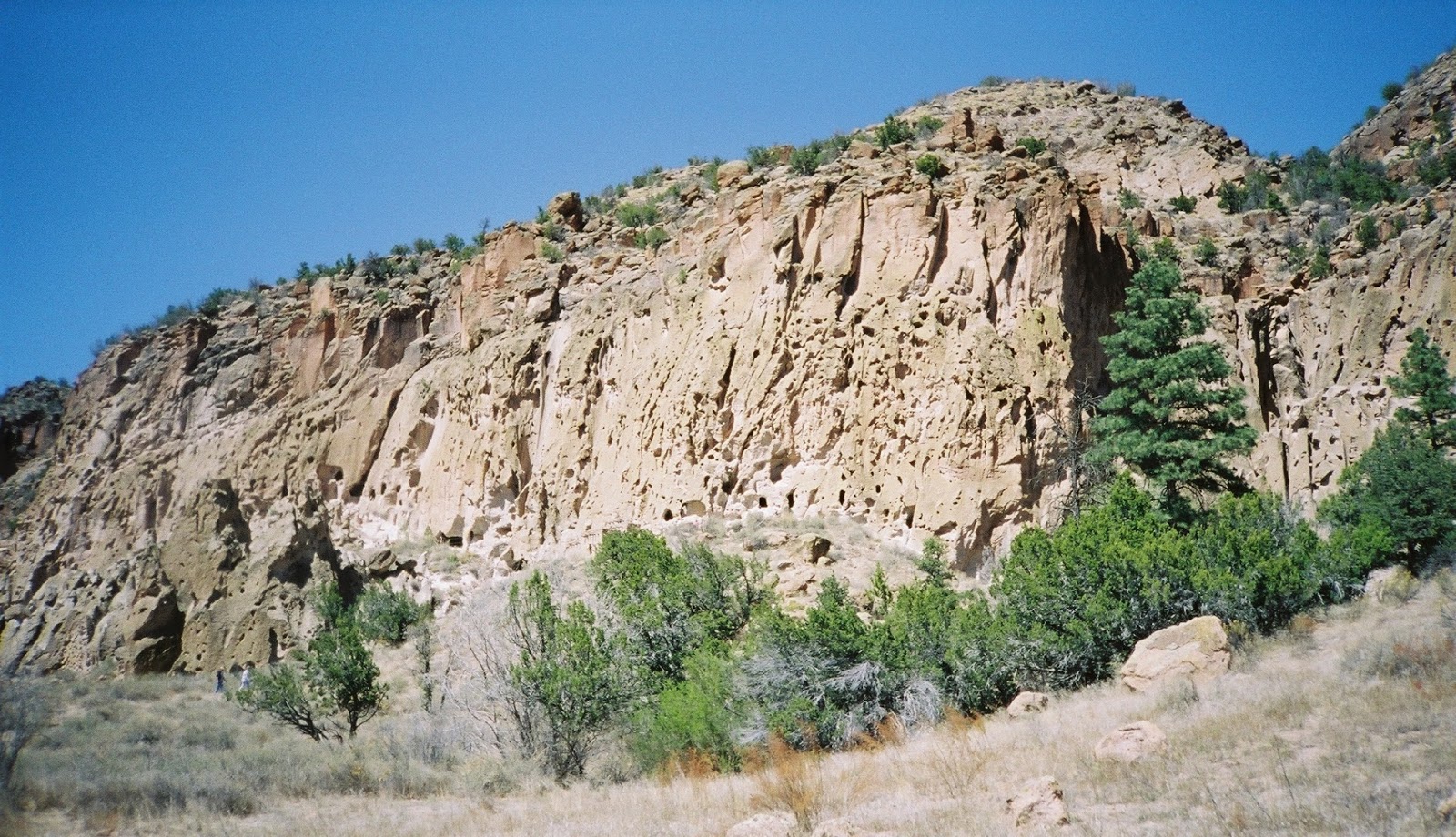
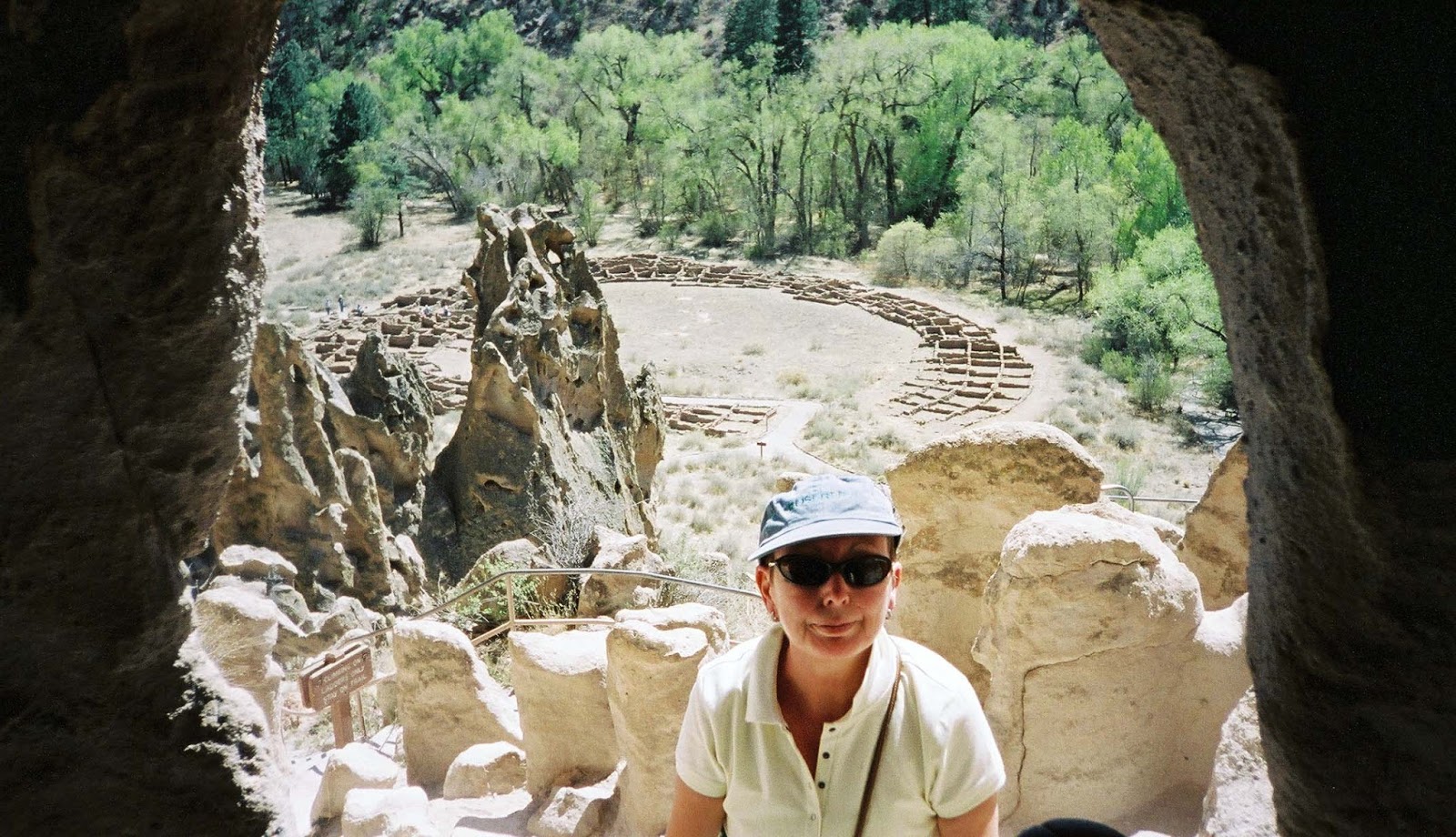
April 2006 -  Bandelier New Mexico

Bandelier National Monument is a 33,677-acre (13,629 ha) United States National Monument near Los Alamos in New Mexico. The monument preserves the homes and territory of the Ancestral Puebloans of a later era in the Southwest. Most of the pueblo structures date to two eras, dating between 1150 and 1600 AD.

This was part of our 2006 Satan Fe New Mexico trip which also included Utah and Colorado.


Details courtesy of Wikipedia.

Bandelier was designated by President Woodrow Wilson as a National Monument on February 11, 1916, and named for Adolph Bandelier, a Swiss-American anthropologist who researched the cultures of the area and supported preservation of the sites.

Frijoles Canyon contains a number of ancestral pueblo homes, kivas (ceremonial structures), rock paintings, and petroglyphs. Some of the dwellings were rock structures built on the canyon floor; others were cavates produced by voids in the volcanic tuff of the canyon wall and carved out further by humans. A 1.2-mile (1.6 km), predominantly paved, "Main Loop Trail" from the visitor center affords access to these features.


Human presence in the area has been dated to over 10,000 years before present. Permanent settlements by ancestors of the Puebloan peoples have been dated to 1150 CE; these settlers had moved closer to the Rio Grande by 1550.The distribution of basalt and obsidian artifacts from the area, along with other traded goods, rock markings, and construction techniques, indicate that its inhabitants were part of a regional trade network that included what is now Mexico.] Spanish colonial settlers arrived in the 18th century. The Pueblo Jose Montoya brought Adolph Bandelier to visit the area in 1880. Looking over the cliff dwellings, Bandelier said, "It is the grandest thing I ever saw."


Much of the area was covered with volcanic ash (the Bandelier tuff) from an eruption of the Valles Caldera volcano 1.14 million years ago. The tuff overlays shales and sandstones deposited during the Permian Period and limestone of Pennsylvanian age. The volcanic outflow varied in hardness; the Ancestral Pueblo People broke up the firmer materials to use as bricks, while they carved out dwellings from the softer material.


Like past inhabitants, you can climb ladders into several of the small carved rooms


June Recap

I'm working backwards on 2026 recaps JUNE 2026 Better Coffee - June 6 Doubrew Coffee - June 13 Forget Me Not Cafe - June 21 Bean to Cup...