One of my all-time favourites!
Showing posts with label Computers. Show all posts
06 March 2026
Women's History Month
On a Friday afternoon in 1985, an engineering manager appeared at Radia Perlman's desk at Digital Equipment Corporation in Massachusetts. He had a problem—and less than four days to solve it.
Their company had a major product launch scheduled for Tuesday. But their networking technology kept collapsing catastrophically. Machines would connect successfully, then suddenly the entire system would drown under an endless flood of duplicate messages, grinding all communication to a halt.
The engineering team was stuck. They needed someone brilliant enough to solve it.
Radia took the problem home for the weekend.
At the time, computer networks were fragile, unpredictable systems. Connecting multiple machines was inherently risky because of something called a broadcast storm—when network cables accidentally formed loops, data packets would circle endlessly, multiplying exponentially until the entire network choked on duplicate messages.
Engineers tried to prevent this through meticulous cable planning, but humans make mistakes. One misplaced connection could crash an entire building's network in seconds.
What networks desperately needed was a way to organize themselves—to automatically detect loops, shut them down, and reroute data without any human intervention.
Most engineers would have reached for complex mathematics, elaborate algorithms, sophisticated hardware solutions.
Radia Perlman thought about trees.
Not database trees or decision trees—actual trees. The kind that grow in forests.
Trees have a remarkably elegant structure: they grow outward from a single trunk. Branches spread and subdivide endlessly, but they never circle back to form loops. Every path from the roots to any leaf is unique. There's exactly one route from any point to any other point.
What if networks could organize themselves the same way?
She began sketching on a yellow legal pad, imagining network devices quietly communicating with each other, electing a central reference point—a "root"—then building the most efficient pathways outward like branches growing from a trunk.
If a cable formed a loop, the system would simply shut down the redundant path. If a cable failed, the network would instantly reconfigure itself, activating a backup route.
No human oversight needed. The network would heal itself.
By the time the weekend ended, she had created Spanning Tree Protocol (STP)—a solution so elegantly simple it seemed almost too obvious.
The logic was beautifully straightforward: All devices exchange messages to elect a "root" device. Each device calculates its shortest path to that root. Any paths that would create loops are automatically blocked. If a cable fails anywhere, the blocked paths instantly reactivate.
When she presented it to her team on Monday morning, the room fell silent. It was brilliant. It was simple. And it worked flawlessly.
Then Radia did something completely unexpected: she wrote a poem about it.
She called it "Algorhyme" (algorithm + rhyme):
"I think that I shall never see
A graph more lovely than a tree.
A tree whose crucial property
Is loop-free connectivity.
A tree that must be sure to span
So packets can reach every LAN.
First, the root must be selected.
By ID, it is elected.
Least-cost paths from root are traced.
In the tree, these paths are placed.
A mesh is made by folks like me,
Then bridges find a spanning tree."
The poem wasn't a joke—it was a teaching tool. Radia understood that complex concepts become accessible when explained with clarity and creativity. The poem captured the entire algorithm in simple, memorable language anyone could understand.
Spanning Tree Protocol was adopted into the IEEE 802.1D standard and became fundamental to Ethernet networking worldwide.
Today, it runs on billions of network switches across the planet.
Every time you send an email, stream a video, or load a website, your data travels through networks that organize themselves using the logic Radia Perlman designed on a yellow legal pad over one weekend in 1985.
But here's what makes this story even more remarkable: Spanning Tree Protocol is just one of her inventions.
Radia Perlman holds over 100 patents. She earned her PhD from MIT in computer science. She contributed to ARPANET, the precursor to the modern internet. She later invented TRILL (Transparent Interconnection of Lots of Links), a modern evolution of STP for today's massive data centers. She's written multiple textbooks on network security and design. She's received countless prestigious awards. She's still actively working in cybersecurity research.
And despite all of this, most people have never heard of her.
In media coverage, she's occasionally called the "Mother of the Internet"—a title she strongly rejects.
"It's not accurate," she's said repeatedly. "Hundreds of people worked on building the internet. I worked on making Ethernet function better. That's important work, but it's not the internet."
She prefers to be known simply as "a good engineer"—which is both admirably humble and deeply frustrating, because Radia Perlman is far more than good. She's one of the most important computer scientists of the past 50 years.
Part of why she remains relatively unknown is timing and gender.
In the 1980s, women in computer science faced systematic dismissal and erasure. Radia's contributions were often overlooked or quietly attributed to male colleagues. She didn't self-promote or seek publicity. She simply kept solving the next problem.
And the nature of her work—invisible infrastructure that makes everything else possible—doesn't naturally generate fame. Nobody consciously thinks about Spanning Tree Protocol when their email sends successfully. People only notice networks when they fail.
Radia built systems so reliable that people never have to think about them.
That's the paradox of infrastructure engineering: the better you do your job, the more invisible your work becomes.
But here's what genuinely matters:
Right now, as you read these words, data is flowing through network switches running Spanning Tree Protocol. Your home router. Your office building. Data centers spanning continents. Billions of devices organizing themselves, preventing loops, healing from failures—all following the logic that Radia Perlman designed over one weekend in 1985.
The modern internet economy—trillions of dollars in global commerce, communication, entertainment, and education—depends on infrastructure that remains stable because of solutions like STP.
Amazon's vast networks? Stabilized by STP.
Google's data centers? STP.
Meta's servers? STP.
Your home Wi-Fi router? Almost certainly running a variant of STP.
Radia Perlman didn't become wealthy from this invention. She didn't achieve widespread fame. She didn't launch a startup or embark on a speaking tour.
She simply went back to work, solving the next problem.
When asked about her legacy, she remains characteristically modest: "I've been fortunate to work on interesting problems with smart people."
No grand declarations. No claiming credit for inventing the internet. Just an engineer who saw a problem, found an elegant solution, and wrote a poem to help others understand it.
Today, Radia Perlman continues working in cybersecurity and network architecture. She's in her 70s and still inventing, still teaching, still making complex systems more reliable and secure.
And billions of people benefit from her work every single day without ever knowing her name.
That's the reality of infrastructure: invisible when it works, noticed only when it breaks.
Radia Perlman built something so fundamentally reliable that it became invisible.
In 1985, over one weekend, armed with a yellow legal pad and an insight about how trees grow, she solved a problem that was crippling networks worldwide.
She wrote a poem to explain it.
And she fundamentally changed how the modern world connects.
Most people will never hear her name.
But every email you send, every video you stream, every website you visit—all of it travels through networks that organize themselves exactly the way Radia Perlman taught them to, nearly 40 years ago.
Quietly. Efficiently. Invisibly.
Just like her.
05 February 2026
31 January 2026
27 January 2026
21 January 2026
28 October 2015
Foto Challenge

Cee's Fun Foto Challenge
Upcoming: Doors and Windows
Upcoming: Buildings and Trees
Upcoming: Wood and Metal
Upcoming: Kids or Pets with Toys
Upcoming: Orange and Green
Upcoming: Anything Painted – from a bird feeder to peeling paint
Cee’s Fun Foto Challenge: Phones or Computers
Me in 2006. We have been around computers since the 1980s.
Our first computer was a Commodore Vic 20!!
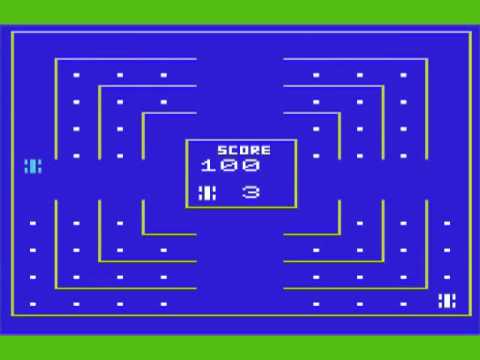
And our first game - Car Chase. Look at those graphics!!
I never leave home without my laptop, phone, e-reader, iPad and cameras!
In a hotel room somewhere!
At home.
28 April 2010
The Office
April 2010
I don't blog about work and my current job.
However, my husband is retiring this week and I was thinking how the office has changed over the years.
As well, several good friends have been "let" go by my company recently so there's been a lot of reminiscing going on.
It hardly bears thinking about, but just imagine having to live without all the technology that we take for granted.
Some of the jobs that have disappeared from job postings and Monster.com are:
Switchboard operators.
Clerical assistants to answer phones and take messages
Typing pools and proof readers to check the typing to ensure there were no errors, spelling or grammar. There were no word processors or spell checks.
Filing clerks.
Mailrooms where you could put your personal mail and it would be stamped and sent out for you. A perk of the job. The mailroom dropped off and picked up the mail from your IN and OUT baskets.
Page girls.A friend, who worked for a "rival" bank started out as one at their Head Office.Had a royal blue tunic/white starched blouse (tunic had to be at the knee...no make-up allowed). Her job was to "deliver" messages between Departments (and used the "tube" to send messages to other floors) for sending messages and all the other crappy jobs no other person wanted to do...
There was a library for doing research. The library staff reviewed newspapers daily for relevant articles, cut them out and created a "clipsheet" which was then circulated to the managers. It would take so long to circulate using s typed distribution list attached to it that it could take a month for you to get "today's" news. Ditto for magazines.
Many other things have changed or disappeared as well.
Head Office was 129 St. James St W, Montreal. It's now in Toronto and the premises in Montreal contain the BMO Museum and is now located at 129 Rue St. Jacques Ouest.
Cash - you no longer take you pay cheque to a branch to deposit in your account on the 15th and 30th of each month.
You use your debit/credit card for most purchases.
You don't pay your telephone bill by putting the stub with a cheque into an envelope, stamping it and then mailing it.
Your boss was called "Mr."
You had to ask your manager if you could apply for a loan. He had the power to say no. Shortly after that you went to the Personnel (now HR) department if you wanted a loan. This meant everyone knew your business.
Pay
The average salary in the 70's was $7,564 a year
If you worked in a branch you may even have had a gun as my husband did.
Training sessions were often 3 day offsite held at luxurious resorts in the Laurentians. These were very decadent affairs (and they did happen) with bathtubs full of beer and not much sleep.
Office parties abounded with the company picking up the bills for large celebrations of milestones. One I remember in particular was to celebrate MECH R22.0. No one made it into the office the next day and our department manager even wrote a poem about it. If I can find it I will add it here.
You used a pen and paper to write a report which was then typed with carbon paper by a secretary, either your own if you were lucky enough to have one or else you sent it to the typing pool. The typing pool was always managed by an ogre whom you addressed as "Mrs".
Doing financial reporting was so labour intensive. We didn't have computers (not even main-frame at this time). You received a photocopied work sheet to enter your numbers, adding machine to balance (this is before calculators became mainstream). If you made a mistake you had to use a correction fluid.
One of the first forms of correction fluid was invented in 1951 by the secretary Bette Nesmith Graham, founder of Liquid Paper. We used a brand called Snopake.
Then all these spreadsheets (real paper) were copied and mailed to a central department who would then consolidate all the various departments' inputs.
Telephone usage was audited monthly and someone collected for any personal long distance calls.
Before "mech" branches manually balanced their G/Ls.
The first ABMs (then known as ATMs) appeared around the mid 80s.
As far back as the mid 90s I remember we had "e-mail" within the company. It was a host based system called PROFS by IBM. OfficeVision/VM was originally named PROFS (for PRofessional OFfice System). Even then you had to power to recall an email as long as the recipient hadn't opened it.
Before that we used triplicate inter-office memos to hadwrite a request to someone and they would respond on the bottom half form and then you could file one of the copies in your filing cabinet in a real folder.
There was the The Year 2000 problem (also known as the Y2K problem, the millennium bug, the Y2K bug, or simply Y2K). I spent many a day managing testing activities to counteract the expected disasters. Hubby spent New Year's Eve at work at WCC awaiting the much anticipated Sev 1 problems. That none of the glitches caused major incidents is seen as vindication of the Y2K preparation. 10 years later he's still waiting for the huge party we were promised as a result of missing New Year's Eve with our friends and families!
In the 70s mini-skirts and hot pants came into fashion. The working girl's attire was outlined in the linked article. The trouser suit
In the 80s power dressing came into vogue for women in the work place.
Things that don't exist anymore:
Inter-office envelopes
Tea/coffee service to your desk
Carbon paper
25 cent lunches in the cafeteria
Liquid lunches at the taven (women were not allowed by law into a tavern in Montreal until 1979)
Our first computer was a Vic 20 introduced in 1980 followed by a Commodore 64.
Would I give up any of this technology? Not by a long shot! I wouldn't be sitting here blogging about it. And I am making far too many friends in Blogland!!
I don't blog about work and my current job.
However, my husband is retiring this week and I was thinking how the office has changed over the years.
As well, several good friends have been "let" go by my company recently so there's been a lot of reminiscing going on.
While on our way to work we used to read the newspaper (delivered by a paper boy) now we open our E-Readers and choose from a myriad of books that suit us at the moment. Or we might listen to our iPod instead. Or you could catch up on your email messages using your Blackberry. We panic when we get to work and discover that we've left our mobile phones at home. We're enraged when our computers crash and we can't order our weekly shopping over the web or do our banking while in the office. Or today perhaps you opted to work from home instead and were completely connected.
Once upon a time there was a strange world without computers, mobiles and the internet. Instead of Bluetooth keyboards there were typewriters. The only way to get money from your bank was to stand in a queue and write a cheque.
There was a time we were promised that all this technology would allow us more free time for families, travel and hobbies. Instead we are tied more effectively to the office. We check emails on vacation, in the evenings and on weekends. We go to the kids' activities or out with friends and everyone is busy pursuing their handheld devices.
Smoking was allowed everywhere. Then came the smoking/non-smoking segregated work spaces, then the smoking area and finally the total ban on smoking.
A ratio of 1 to 50 women worked as managers or in important positions. Also they were paid lower rates compared to males doing similar jobs at the time.
Once upon a time there was a strange world without computers, mobiles and the internet. Instead of Bluetooth keyboards there were typewriters. The only way to get money from your bank was to stand in a queue and write a cheque.
There was a time we were promised that all this technology would allow us more free time for families, travel and hobbies. Instead we are tied more effectively to the office. We check emails on vacation, in the evenings and on weekends. We go to the kids' activities or out with friends and everyone is busy pursuing their handheld devices.
Smoking was allowed everywhere. Then came the smoking/non-smoking segregated work spaces, then the smoking area and finally the total ban on smoking.
A ratio of 1 to 50 women worked as managers or in important positions. Also they were paid lower rates compared to males doing similar jobs at the time.
Some of the jobs that have disappeared from job postings and Monster.com are:
Switchboard operators.
Clerical assistants to answer phones and take messages
Typing pools and proof readers to check the typing to ensure there were no errors, spelling or grammar. There were no word processors or spell checks.
Filing clerks.
Mailrooms where you could put your personal mail and it would be stamped and sent out for you. A perk of the job. The mailroom dropped off and picked up the mail from your IN and OUT baskets.
Page girls.A friend, who worked for a "rival" bank started out as one at their Head Office.Had a royal blue tunic/white starched blouse (tunic had to be at the knee...no make-up allowed). Her job was to "deliver" messages between Departments (and used the "tube" to send messages to other floors) for sending messages and all the other crappy jobs no other person wanted to do...
There was a library for doing research. The library staff reviewed newspapers daily for relevant articles, cut them out and created a "clipsheet" which was then circulated to the managers. It would take so long to circulate using s typed distribution list attached to it that it could take a month for you to get "today's" news. Ditto for magazines.
Many other things have changed or disappeared as well.
Head Office was 129 St. James St W, Montreal. It's now in Toronto and the premises in Montreal contain the BMO Museum and is now located at 129 Rue St. Jacques Ouest.
Cash - you no longer take you pay cheque to a branch to deposit in your account on the 15th and 30th of each month.
You use your debit/credit card for most purchases.
You don't pay your telephone bill by putting the stub with a cheque into an envelope, stamping it and then mailing it.
Your boss was called "Mr."
You had to ask your manager if you could apply for a loan. He had the power to say no. Shortly after that you went to the Personnel (now HR) department if you wanted a loan. This meant everyone knew your business.
Pay
The average salary in the 70's was $7,564 a year
If you worked in a branch you may even have had a gun as my husband did.
Training sessions were often 3 day offsite held at luxurious resorts in the Laurentians. These were very decadent affairs (and they did happen) with bathtubs full of beer and not much sleep.
Office parties abounded with the company picking up the bills for large celebrations of milestones. One I remember in particular was to celebrate MECH R22.0. No one made it into the office the next day and our department manager even wrote a poem about it. If I can find it I will add it here.
You used a pen and paper to write a report which was then typed with carbon paper by a secretary, either your own if you were lucky enough to have one or else you sent it to the typing pool. The typing pool was always managed by an ogre whom you addressed as "Mrs".
Doing financial reporting was so labour intensive. We didn't have computers (not even main-frame at this time). You received a photocopied work sheet to enter your numbers, adding machine to balance (this is before calculators became mainstream). If you made a mistake you had to use a correction fluid.
One of the first forms of correction fluid was invented in 1951 by the secretary Bette Nesmith Graham, founder of Liquid Paper. We used a brand called Snopake.
Then all these spreadsheets (real paper) were copied and mailed to a central department who would then consolidate all the various departments' inputs.
Telephone usage was audited monthly and someone collected for any personal long distance calls.
Before "mech" branches manually balanced their G/Ls.
The first ABMs (then known as ATMs) appeared around the mid 80s.
As far back as the mid 90s I remember we had "e-mail" within the company. It was a host based system called PROFS by IBM. OfficeVision/VM was originally named PROFS (for PRofessional OFfice System). Even then you had to power to recall an email as long as the recipient hadn't opened it.
Before that we used triplicate inter-office memos to hadwrite a request to someone and they would respond on the bottom half form and then you could file one of the copies in your filing cabinet in a real folder.
There was the The Year 2000 problem (also known as the Y2K problem, the millennium bug, the Y2K bug, or simply Y2K). I spent many a day managing testing activities to counteract the expected disasters. Hubby spent New Year's Eve at work at WCC awaiting the much anticipated Sev 1 problems. That none of the glitches caused major incidents is seen as vindication of the Y2K preparation. 10 years later he's still waiting for the huge party we were promised as a result of missing New Year's Eve with our friends and families!
In the 70s mini-skirts and hot pants came into fashion. The working girl's attire was outlined in the linked article. The trouser suit
In the 80s power dressing came into vogue for women in the work place.
Things that don't exist anymore:
Inter-office envelopes
Tea/coffee service to your desk
Carbon paper
25 cent lunches in the cafeteria
Liquid lunches at the taven (women were not allowed by law into a tavern in Montreal until 1979)
Our first computer was a Vic 20 introduced in 1980 followed by a Commodore 64.
Would I give up any of this technology? Not by a long shot! I wouldn't be sitting here blogging about it. And I am making far too many friends in Blogland!!
Subscribe to:
Posts (Atom)
Every Child Matters
October 30 - National Day for Truth and Reconciliation The National Day for Truth and Reconciliation is an annual federal statutory holiday...