Showing posts with label hockey. Show all posts

18 June 2026

It's Always About Money

 I remember when we came to Canada and lived in Baie Comeau and only got French TV stations, Hockey Night in Canada was a highlight of the week!


The end of Hockey Night in Canada is more than just the end of a television show.


Hockey Night in Canada was something uniquely Canadian.
Now it is gone.
A piece of our cultural tapestry now in the dustbin of history.


 Hockey Night in Canada will no longer air on CBC after the current season, ending a tradition that has been on Canadian TV since 1952. Sportsnet and CBC announced the end of their 12-year NHL partnership. 📺 🇨🇦

Hockey Night in Canada on CBC is the eighth longest running TV show in THE HISTORY OF THE WORLD at 72 seasons.
Add in radio, and it's been a Saturday night fixture for families on CBC for 90 years. 
There has never been a Canadian cultural institution like it, and there never will be again.


BEHIND A PAYWALL!


22 April 2026

If You're Canadian then you know...

 April 2026

Yesterday was Roger Doucet's birthday and I came across this.

Join us in raising a glass to Quebec tenor Roger Doucet.
Born on April 21, 1919, his soaring renditions of “O Canada” became legendary at Montreal Canadiens, Alouettes, and Expos games—especially his bilingual version, beginning in French and ending in English, celebrating Canada’s two official languages. 
Watch him light up the Montreal Forum in Norma Bailey’s CANADA VIGNETTES: THE PERFORMER → bit.ly/3GqyTfi

Roger Doucet CM (21 April 1919 – 19 July 1981) was a Canadian tenor best known for singing the Canadian national anthem, "O Canada", at televised games of the Montreal Canadiens, Montreal Alouettes, and Montreal Expos during the 1970s. He was particularly known for his bilingual version of the anthem, which began in French and ended in English, in recognition of the two languages of Canada.
Doucet also changed the way Canadians sing their anthem. Before Doucet, the final "we stand on guard for Thee" was universally sung the way it was written: fa-mi-re-soh-ti-doh, with the 'ti' and the 'doh' falling. Doucet sang the final 'ti-doh' by raising these notes an octave above their traditional pitch. The audience of CBC's Hockey Night in Canada was so vast, and his rendition so powerful, that within a few years Doucet's version became—and remains — the accepted way to conclude O Canada.

These lyrics were modified in 2018, when legislation was passed to change the English lyrics. The line “True patriot love in all thy sons command” was changed to “True patriot love in all of us command,” in order to make the lyrics gender neutral.


Fun little fact, John and I both worked with his wife, Geraldine, at the Bank of Montreal, in Montreal.


Which then lead me to other clips.


15 July 2025

Tuesday Treasures

 Tom the backroads traveller hosts this weekly meme.

The Bank of Montreal was founded in 1817 and was the first chartered bank in Canada. It served as the central bank for the country until the founding of the Bank of Canada in 1935. Legislation in 1824 prevented the bank from serving the town of York but it got its break in 1840 when it took over The Bank of The People. This was a reformer bank started in 1835 to provide loans to farmers that the Bank of Upper Canada wouldn’t serve. The Family Compact didn’t like the direct competition of reformers and plotted to have the bank taken over by the Bank of Montreal. In 1885 they opened a branch at Yonge and Front Streets and this building is one of the few in this area that survived the great fire of 1904. The building was designated in 1976 for its heritage value as one of the finest examples of 19th century bank buildings in Canada. It is now home to The Hockey Hall of Fame.

Click here for Bank of Montreal (BMO) history as a branch, it is a most interesting article with extensive number of photos.

My main purpose visiting the Hockey Hall of Fame was to get these photos!!


Built within 10 years of the birth of hockey, the building that houses the Esso Great Hall is a quiet place in which to reflect on the richness of our past. Construction of the building began in 1885, during a period of great prosperity and optimism in Canada's future. Originally a bank, the building reflected the importance of banking in the formation of a country in much the same way that it now reflects the importance of hockey in the building of a culture.

This florid example of rococo architecture was designed by the Toronto firm of Darling and Curry, which also created the similarly august Toronto Club a few blocks away. Used by the Bank of Montreal as a head office until 1949, the building continued to serve as a branch until 1982, when it closed for the last time.

The building remained largely unused until its restoration by BCE Place (now Brookfield Place) for use as the Hockey Hall of Fame (except for the rumoured presence of Dorothy, the ghost of a former teller who took her own life after a failed love affair with the bank manager -see below).

Customers entered the Banking Room through the building's main doors on the southeast corner.

Entering the Esso Great Hall, you find yourself in a room that was once the largest bank branch in Canada. 
The banking room is three stories in height. The lower portion of the walls is covered in rich cherrywood. 
Richly modeled detail abounds in the Hall, framing the mezzanine on the west side. This was the former boardroom, behind which was the bank manager's private apartment. 

Measuring 70 by 70 feet, the room rises to a 45-foot-high stained glass dome. Rendered in the best traditions of classical symbolism, the dome is the largest of its kind in Toronto. Constructed by Joseph McCausland and Sons, it features 24 fanned panels that depict allegorical dragons guarding gold from eagles. Around the outside are a cornucopia of fruit and flowers. In the centre, eight circles bear emblems representing what were then the seven provinces and Canada. The task of restoring the stained glass to its original glory was given to Andrew McCausland, the great-great-grandson of builder Joseph McCausland, whose son Robert was responsible for the original design.


 Toronto - The suicide happened on March 11, 1953. Dorothea had come in much earlier than the other tellers and went straight to the upstairs bathroom where she stayed for a period of time. She eventually came down and went back up to the bathroom where she shot herself with the banks .38 calibre revolver. The 19-year-old was carried down in a Windsor-style chair and rushed to St. Michael’s Hospital. She died 22 hours after shooting herself in the head, which doctors considered a miracle.

For year’s nobody knew the true identity of the woman who killed herself and stories have been floating around for years on why she killed herself. People who have told the ghost story referred to the ghost as Dorothy. However, after some investigative digging by The Toronto Star the woman’s identity was finally revealed. Her name was Dorothea Mae Elliott.

According to source Dorothea was having an affair with either a married teller or branch manager. After confronting her lover and being rejected she shot herself in the upstairs bathroom. However, there have been a number of other rumours as to why she killed herself.


Click here to read more fascinating stories of Dorothy sightings. Now we want to know more about the BMO ADD department that operated out of that building in the 1980s!

05 April 2024

Weekend Roundup

 Welcome to The Weekend Roundup...hosted by Tom The Back Roads Traveller

1. Starts with "N"
2. A Favorite
3.NICE - chosen by Tom

Starts with N

NAMES St. Louis MO


FAVOURITE

NOISE Las Vegas NEVADA 


NICE


25 March 2024

2024 Road Trip - Day 13 Las Vegas

 March 23 2024 Las Vegas

Click here for:

March 11Day 1 Toronto to Fort Wayne
Mar 12 Day 2  Fort Wayne to St. Louis
Mar 13 Day 3  St. Louis
Mar 14 Day 4  St. Louis MO to Tulsa OK
Mar 18 Day 8 Las Vegas
Mar 23 Day 13 Las Vegas

We lazed around today, doing computer (administrivia, travel updates and blog updates) work.

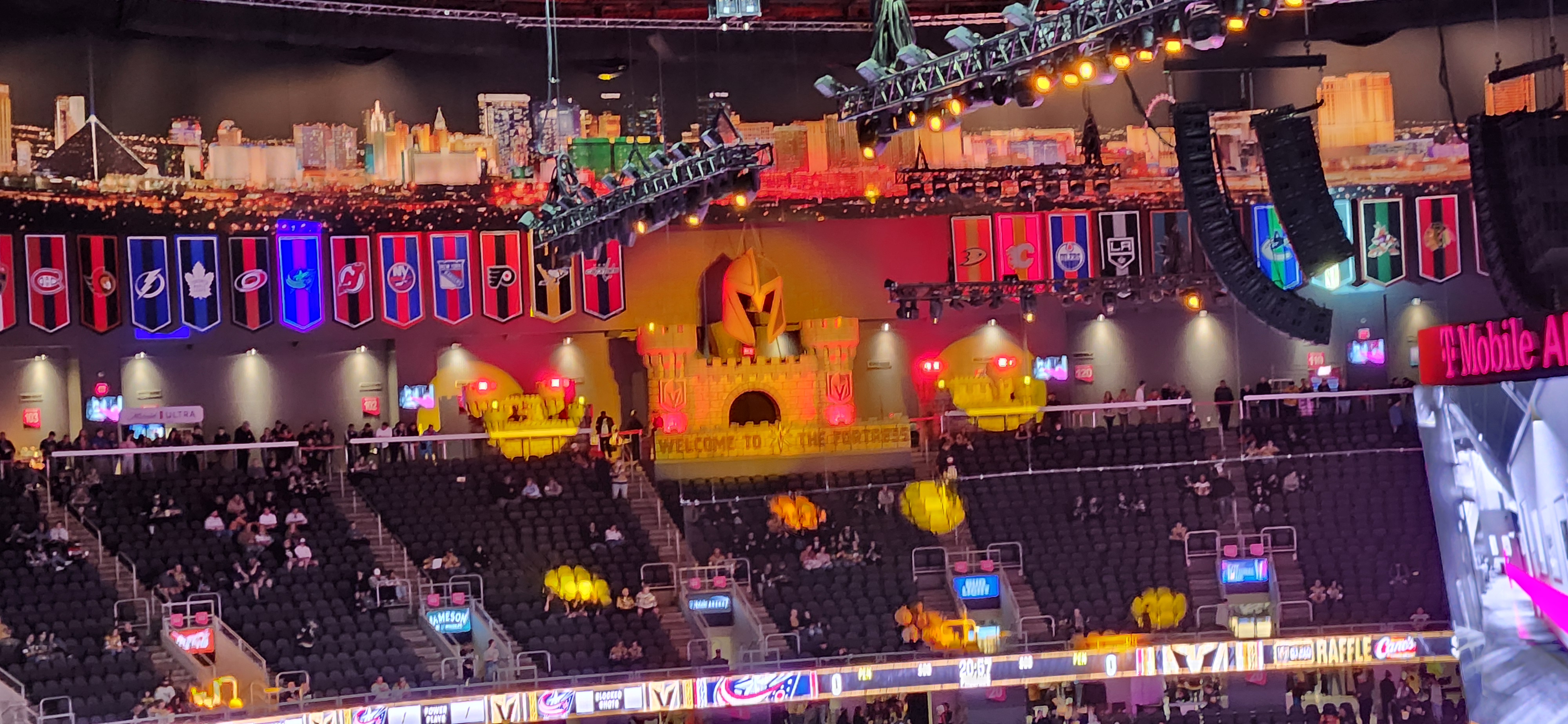
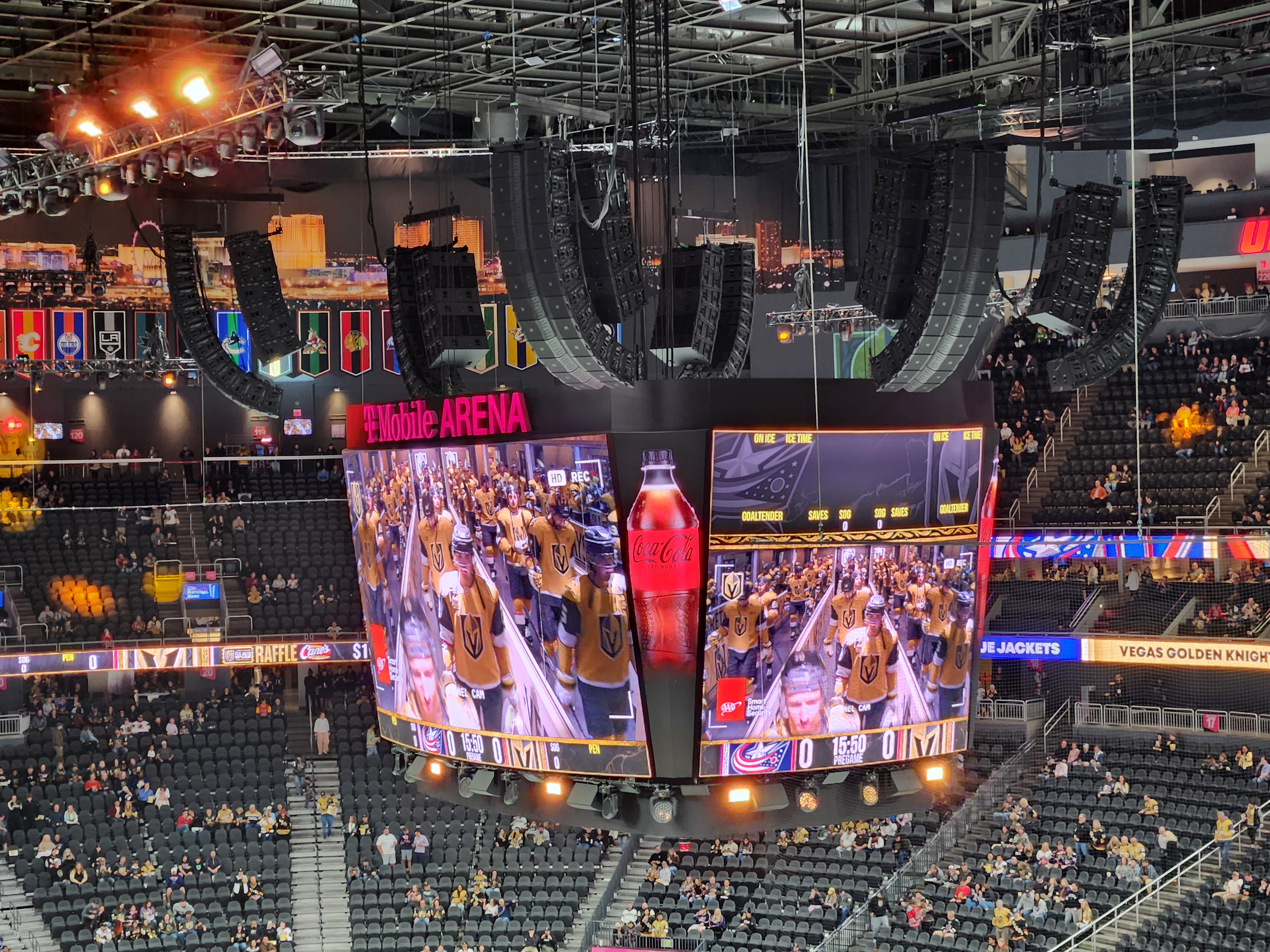
It was a very windy day so we bundled up to walk from the condo to the T-Mobile Arena for a 7:30 Golden Knights hockey game.
T-Mobile Arena is a multi-purpose indoor arena. Opened on April 6, 2016, it is the home arena of the Vegas Golden Knights of the National Hockey League (NHL). A joint venture between MGM Resorts International and Anschutz Entertainment Group (AEG), T-Mobile Arena is situated on the Las Vegas Strip behind the New York-New York and Park MGM casino hotels.

It is locally called The Fortress.


It is Vegas!


The Vegas Golden Knights are a professional ice hockey team based in the Las Vegas metropolitan area. The Golden Knights compete in the National Hockey League (NHL) as a member of the Pacific Division in the Western Conference. Founded in 2017 as an expansion team, the team is the first major sports franchise to represent Las Vegas. 

One of the few expansion franchises to experience immediate success, the Golden Knights qualified for the Stanley Cup playoffs in their first four seasons and reached the Stanley Cup Finals in their first season. Their 13 playoff wins en route to the 2018 Stanley Cup Finals are the most for a team during their inaugural postseason run. In 2023, the club returned to the Stanley Cup Finals and won their first Stanley Cup championship, defeating the Florida Panthers in five games.


They were unable to call the team the "Vegas Knights" because the London Knights owned the "Knights" name in Canada. "Golden" was included in the name because gold is the "No. 1 precious metal", and because Nevada is the largest gold-producing state in the country.

It soon filled to capacity.


Out of the 19 Canadians on the Vegas roster, Ontario is the province with the most representation. There are five players that come from Ontario, all hailing from different locations. There are also players from Quebec, British Columbia, Manitoba, Saskatchewan and Alberta.


The players enter the ice through a giant knight's  helmet.

The Great Helm or heaume is a helmet of the High Middle Ages which arose in the late twelfth century in the context of the Crusades the great helm or heaume also called pot helm, is a helmet of the High Middle Ages and remained in use until the fourteenth century.


We left halfway through the third period. It was a cold walk back.

Outside the arena - Bliss Dance is a breathtaking, 40-foot-tall sculpture of a dancing woman, celebrating the strength of a woman who is both safe and present. The structure and scale of Bliss Dance was inspired by artist Marco Cochrane's first experience at Burning Man, an annual arts and culture event in Nevada's Black Rock Desert, where Bliss Dance later debuted. Most recently, Bliss Dance resided on San Francisco's Treasure Island as a public display before being refurbished and returned to the desert as a centerpiece of The Park's natural landscaping and Nevada-inspired design.


01 February 2019

Pull Up a Seat


Toronto ON

I couldn't do a post from Canada without including a hockey photo!

BENCHED
Removed from a game or removed from play; can be applied to any situation where one is not permitted to participate in an activity.

Derived from the sporting world where players often sit on a bench when not playing. A player can be benched for many reasons including but not limited to: playing or performing poorly or sucking, breaking a rule, disobeying the coach or leader, unsportsmanlike conduct, not following the game plan, showing up late, etc.


Known as Legends' Row it reminds fans of the glory days of the Maple Leafs.

Ted Kennedy, Darryl Sittler, Johnny Bower, Borje Salming, George Armstrong, Syl Apps, Mats Sundin, Dave Keon, Turk Broda and Tim Horton, Wendel Clark, Frank Mahovlich, Red Kelly and Charlie Conacher and the bench is full.


Amusing

15 More Things Americans Believe About Canada That Are Completely Wrong  12 Things You Won't Believe Canada Invented (Americans Get Thes...