March 2017 - Solvang CA
The Danish town of Solvang was built up around the mission proper in the early 1900s. It was through the efforts of Father Alexander Buckler in 1904 that reconstruction of the mission was undertaken, though major restoration was not possible until 1947 when the Hearst Foundation donated money to pay for the project. The restoration continues to this day, and the CapuchinFranciscan Fathers take excellent care of Mission Santa Inés.
Next week I'll have a smaller version of this mission for you!
Mission Santa Inés (sometimes spelled Santa Ynez) is a Spanish mission and named after St. Agnes of Rome. Founded on September 17, 1804 by Father Estévan Tapís of the Franciscan order, the mission site was chosen as a midway point between Mission Santa Barbara and Mission La Purísima Concepción, and was designed to relieve overcrowding at those two missions and to serve the Indians living east of the Coast Range.
The mission was home to the first learning institution in Alta California.
Mission Santa Inés in about 1912. The mission's original three-bell campanario, erected in 1817, collapsed in a storm in 1911 and was subsequently replaced by this concrete four-bell version, which also had openings on the side. This tower was replaced in 1948 to restore the original three-niched appearance.
Most of the original church was destroyed on December 21, 1812 in an earthquake centered near Santa Barbara that damaged or destroyed most of California's missions. The quake also severely damaged other mission buildings, but the complex was not abandoned. A new church, constructed with 5-to-6-foot-thick (1.5 to 1.8 m) walls and great pine beams brought from nearby Figueroa Mountain, was dedicated on July 4, 1817. A water-powered grist mill was built in 1819, about half a mile from the church. In 1821, a fulling mill was added, designed by newly arrived American immigrant Joseph John Chapman.
Fulling, also known as tucking or walking (spelt waulking in Scotland), is a step in woollen clothmaking which involves the cleansing of cloth (particularly wool) to eliminate oils, dirt, and other impurities, and making it thicker. The worker who does the job is a fuller, tucker, or walker, all of which have become common surnames.
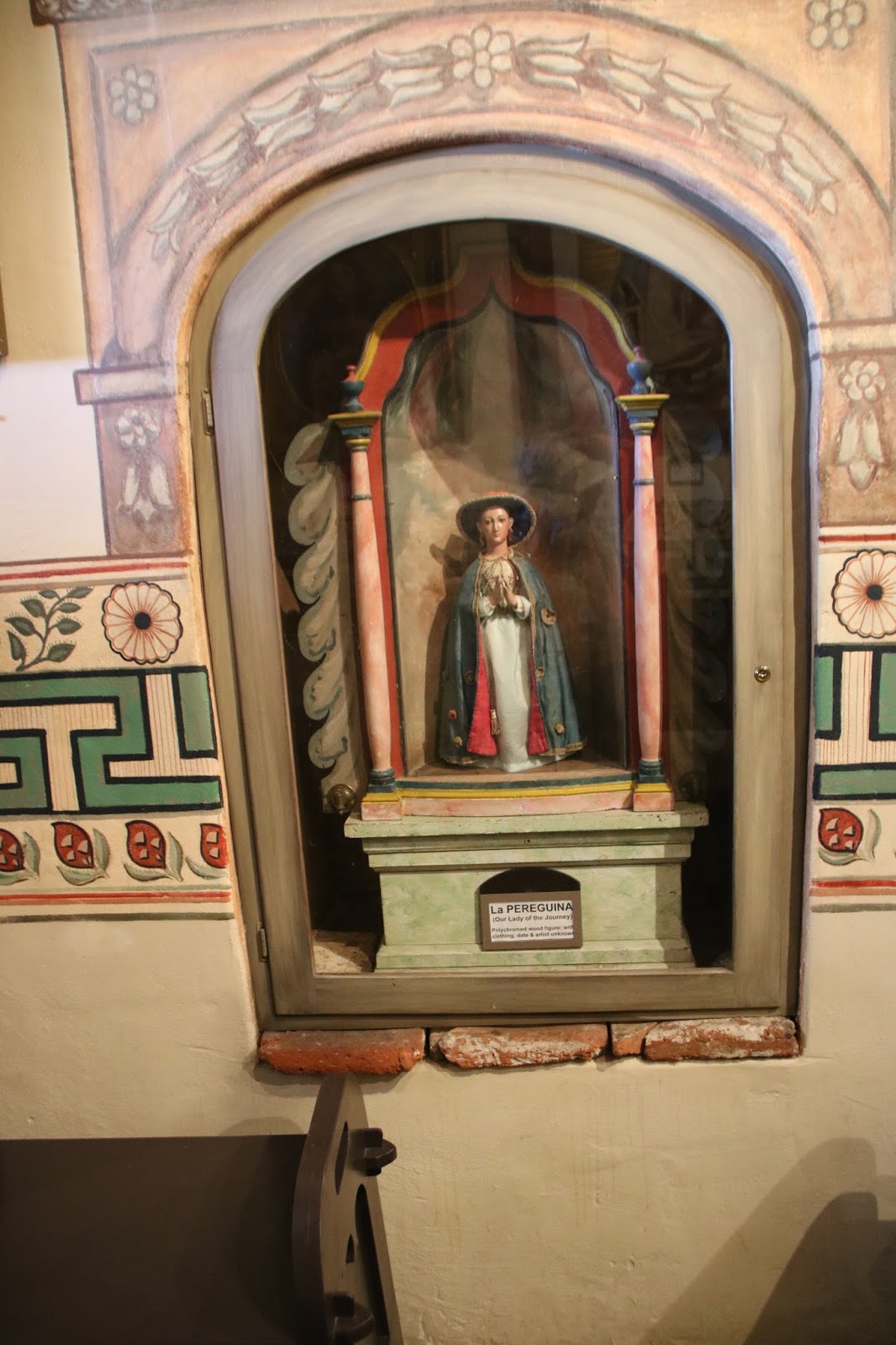
Let's step inside the chapel.
On February 21, 1824 a soldier beat a young Chumash Indian and sparked the Chumash Revolt of 1824. Some of the Indians went to get the Indians from Missions Santa Barbara and La Purísima to help in the fight. When the fighting was over, the Indians themselves put out the fire that had started at the mission. Many of the Indians left to join other tribes in the mountains; only a few Indians remained at the mission.
In 1833 the missions in California were secularized, and most of their land given in land grants to settlers.


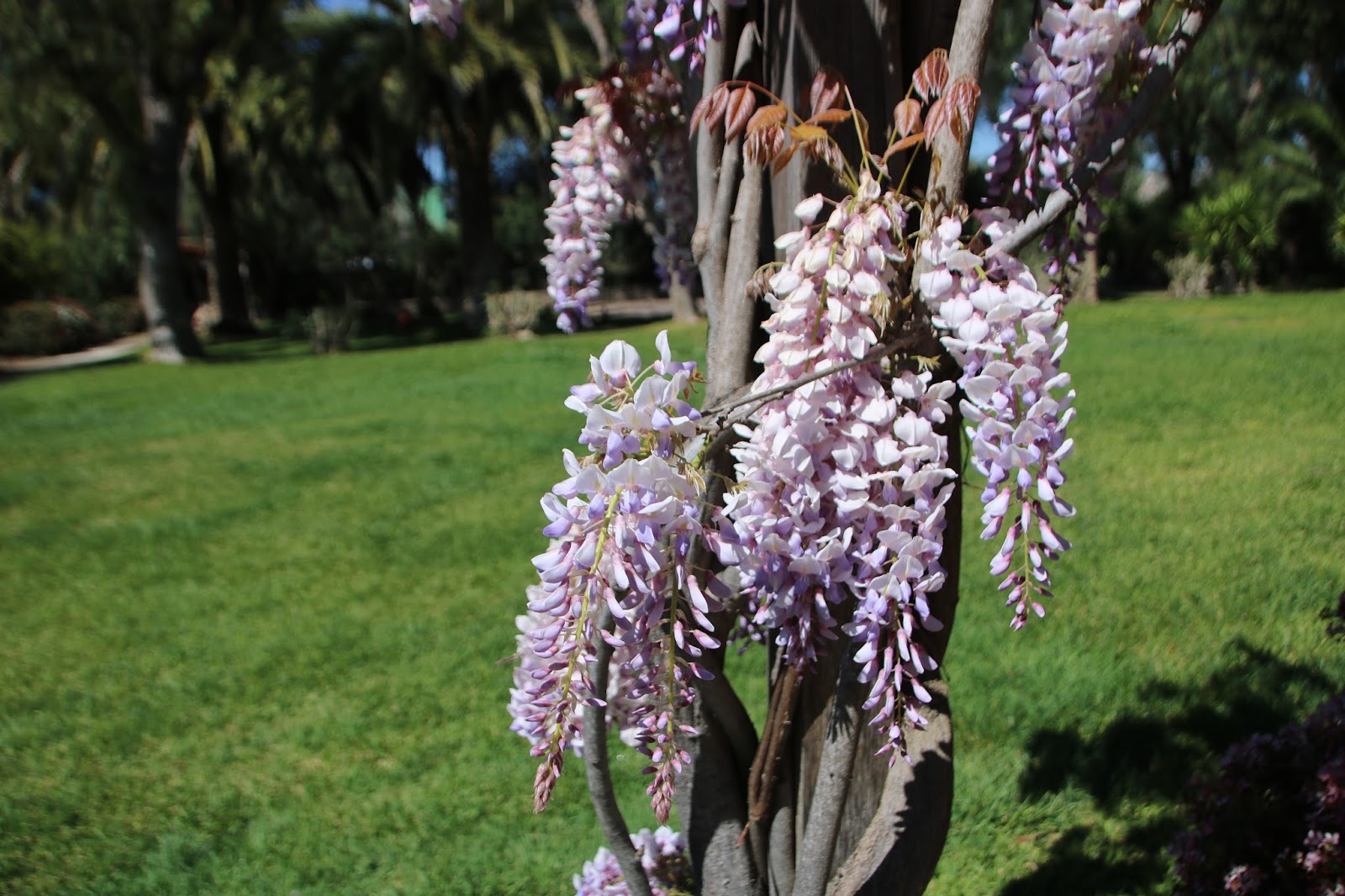
Let's step outside, it is a gorgeous spring day.
Did you know that you are standing where the first institution for higher education in California was built?
In May 1844, the first seminary of the future State of California was established here. Built within the Mission Santa Inés quadrangle it was named The College of Our Lady of Refuge of Sinners.
Here you can see a portion of the original floor of that two-story building which ran north and south. Just like the Church it was made of adobe with at tile roof and was about 120' long and 50' wide. The lower floor was divided into classrooms and rooms for the instructors. The upper floor contained the dormitories with a porch over the ground floor.
The exposed floor that you see is asphalt and is typical flooring of the period.


Pasquale’s parents had come to the mission when she was just a small child because she was very ill from food poisoning. They remained as neophytes to learn the Catholic Faith and live in the village there. Several years after their arrival, the Tulare Indians went on the warpath, stirred up by the shamans who resented the growing influence of the padres. One day they attacked the mission and killed Pasquale’s father while he was working in the mission vineyards. They kidnapped Pasquala and her mother, whom they took to a Tulare village some miles away. Shortly afterwards, her mother died.
When Pasquala heard that the Tulares were planning a new, larger attack on the mission, she ran away from the village and walked for days through the rocky hills and valleys to reach the mission. When she arrived there, exhausted, she called out to Father Uria, “Padre! Padre! War! War!”
The friar ordered the people to safe quarters and prepared for the oncoming attack. Soldiers from the presidio fought off the Tulare Indians and kept them from destroying the mission.
The difficult journey to the mission was too much for Pasquala. Her remaining strength ebbed away and she died. To reward Pasquala’s courage and loyalty, Father Uría buried the young Indian girl in the church courtyard, a high honor.


In the graveyard behind the church you can see many unmarked Indian graves. But one name at least has survived, a placard dedicated to Pasquala telling her story stands in the verdant, well-manicured gardens of Mission Santa Ines, a testimonial to her courage and devotion.
We'll come back to this mission next week.